
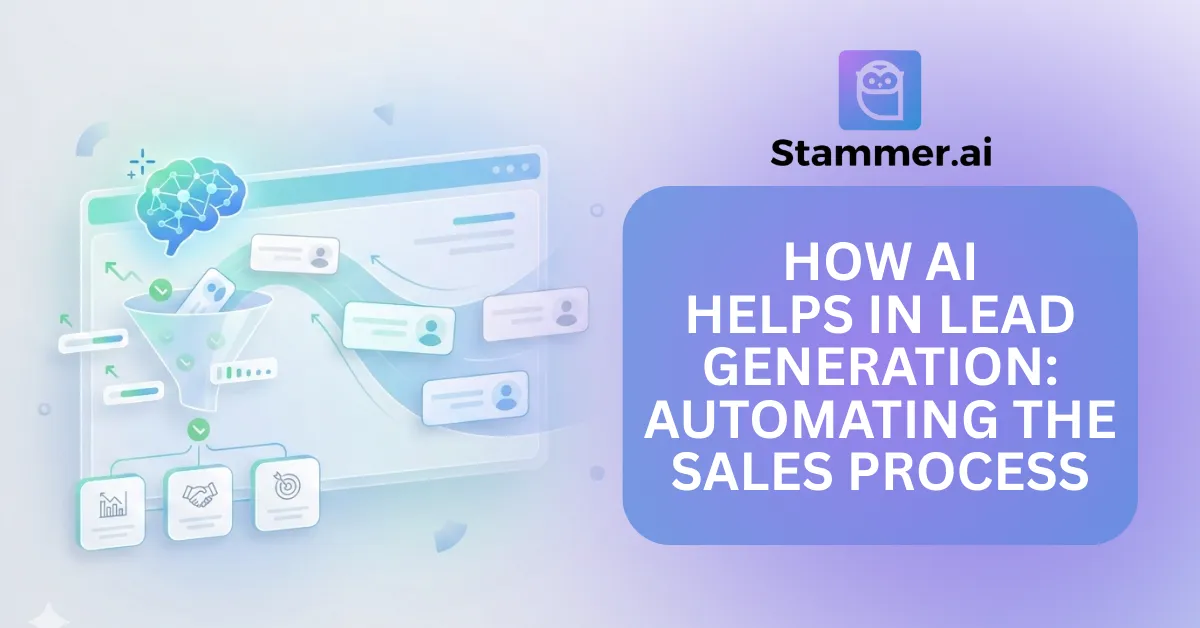
How AI Helps in Lead Generation: Automating the Sales Process
The way prospects discover and engage with businesses has changed fundamentally. Customers now reach out through websites, messages, and calls, often expecting quick replies. When sales teams rely only on manual work, it becomes hard to keep up. Slow responses and missed follow-ups can cause businesses to lose potential customers.
This article explains why sales automation is no longer a choice but a need for modern businesses. It explores how artificial intelligence is changing the way leads are handled and why many companies are turning to AI to support steady and scalable sales growth in a fast-moving digital world.
Where Traditional Lead Generation Breaks Down
Traditional lead generation relies heavily on human effort, which often leads to delays in responding to inquiries. When prospects do not receive quick replies, their interest drops, and many leads are lost before any real conversation begins.
Manual lead qualification also introduces errors. Sales teams may misjudge a prospect’s intent or spend time on leads that are not ready to buy. Follow-up becomes even more difficult when inquiries come from multiple channels, resulting in missed or repeated messages.
Over time, sales teams become overwhelmed by large volumes of low-intent prospects, leaving less time and energy for leads that are more likely to convert.
AI as the First Point of Contact in the Sales Funnel
AI often serves as the first interaction a potential customer has with a business. AI chat agents can respond instantly when a visitor lands on a website or sends a message, ensuring no inquiry goes unanswered. This immediate engagement helps keep prospects interested and encourages them to continue the conversation.
Through natural dialogue, AI can collect structured lead information such as needs, preferences, and contact details without feeling intrusive. These conversations remain consistent across websites, messaging apps, and social platforms, allowing prospects to move between channels without restarting the process.
Automating Lead Qualification with AI Intelligence
AI makes lead qualification faster and more accurate by analyzing user intent, behavior, and the context of each conversation. It can understand what a prospect is looking for, how engaged they are, and where they are in the buying journey.
Based on this analysis, AI automatically categorizes leads by readiness and priority. High-value or sales-ready prospects are identified immediately, while less-engaged leads can be nurtured over time.
By filtering and prioritizing leads, AI ensures that human sales teams focus only on opportunities with the highest chance of conversion. This reduces wasted effort and allows teams to close deals more efficiently.
AI-Driven Lead Nurturing Without Manual Effort
AI keeps potential customers engaged even when they are not ready to buy. For undecided or early-stage prospects, AI can provide timely information, answer questions, and offer helpful guidance without requiring constant human intervention.
Unlike generic follow-up sequences, AI uses context from previous interactions to personalize messages and responses. This ensures prospects feel understood and valued at every step of their journey.
AI helps prevent leads from dropping off during long decision cycles by maintaining consistent and relevant engagement. Businesses can nurture more prospects simultaneously, improving the chances of conversion without overloading sales teams.
AI Voice Agents in Sales Automation
AI voice agents bring automation to phone-based sales interactions. They can handle inbound sales calls without human intervention. These agents can qualify leads through natural conversations, capturing essential information such as needs, preferences, and contact details. The data is structured and stored automatically, reducing manual entry errors and ensuring accuracy.
AI voice agents can also book appointments, schedule follow-ups, and update CRM or sales systems in real time. This seamless integration keeps the sales pipeline organized while allowing human teams to focus on closing deals rather than routine administrative tasks.
Connecting AI Lead Generation with CRM and Sales Pipelines
AI lead generation works best when it integrates seamlessly with CRM and sales systems. Conversations and lead data collected by AI are automatically synced, ensuring all information is accurate and up to date.
AI interactions can also trigger specific sales workflows, such as follow-up emails, notifications to sales reps, or task assignments, making the process faster and more organized.
This integration improves visibility across the sales funnel, allowing teams to track every lead’s journey. It also increases accountability, as all interactions and next steps are recorded.
How Stammer AI Enable End-to-End Sales Automation
Stammer AI allows businesses to manage both chat and voice AI agents from a centralized dashboard. This unified system simplifies the setup, monitoring, and optimization of all automated sales interactions.
One of its standout features is the Chat Agent Marketplace, where businesses and agencies can access ready-to-use templates for AI lead generation, appointment scheduling, and client engagement.
These templates cover specific industries such as real estate, roofing, landscaping, law firms, and AI services. This allows teams to quickly deploy AI agents without starting from scratch. Agents can be trained on business-specific data, capture structured lead information, qualify prospects, and route them into sales workflows automatically.
Real-World Use Cases of AI in Sales Automation
AI in sales automation is being used across industries to improve efficiency and revenue.
Small Businesses and Startups: AI chat agents handle customer inquiries instantly, capture lead details, and schedule appointments, allowing small teams to manage sales without hiring extra staff.
Digital Marketing and SaaS Agencies: Agencies use AI to qualify leads for multiple clients, manage follow-ups, and run campaigns at scale. White-label AI platforms let them provide professional AI-driven services under their own brand.
E-commerce and Service Companies: AI assists in product recommendations, follow-up messages, and lead nurturing, ensuring that potential customers receive timely and relevant information throughout their buying journey.
These examples show how AI can streamline sales, reduce manual effort, and increase conversion rates across different business models.
Conclusion
AI is now a key part of modern sales. It can answer questions instantly, sort leads by readiness, and keep potential customers engaged. Stammer AI makes it easy for businesses to manage chat and voice agents while keeping all lead information organized.
Using AI helps sales teams focus on closing deals instead of doing repetitive tasks. With customers expecting fast and seamless service, AI makes it easier to turn leads into loyal customers while saving time and effort.