AI Outbound Calling: How It Works, Compliance & Agency Guide
Not long ago, outbound calling meant a room full of reps working through a contact list by hand. They dialed, waited, left voicemails, and started again. Most of the day went to calls that never connected.
That model is fading. AI voice agents now place calls on their own, hold a real back and forth with the person who answers, and log the result the moment the call ends. For businesses, this means faster follow-up and round the clock coverage. For agencies, it opens a service worth selling.
This guide covers what AI outbound calling actually is, where it gets used, the legal rules that apply in 2026, and how agencies can package it into a paid offer for their clients.
What Is AI Outbound Calling?
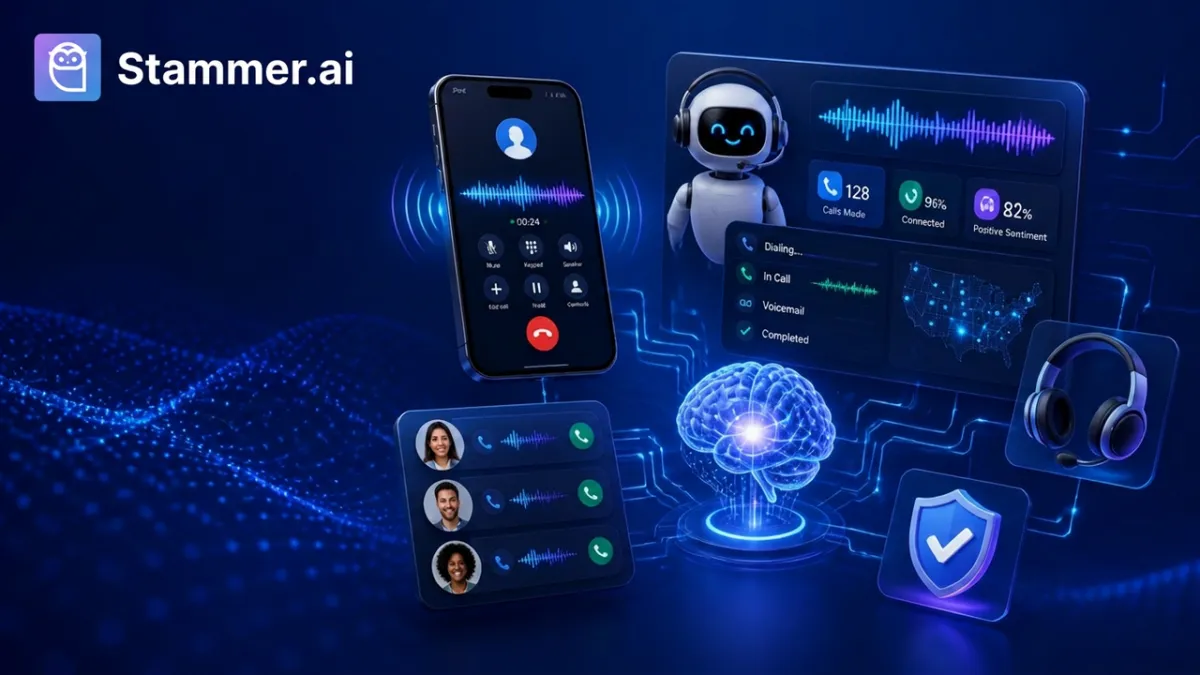
AI outbound calling is software that places phone calls on its own, carries on a natural conversation, and acts on what it learns, all without a person dialing or speaking.
The call connects, the agent talks, the person responds, and the agent adjusts in real time. It can answer questions, ask its own, qualify a lead, book a meeting, or pass the call to a human when the moment calls for it.
It helps to be clear about what this is not, since the term gets mixed up with older tools:
Robocall: plays a fixed recording and cannot respond to anything the person says.
IVR: the press one for sales, press two for support menus, built on keypad input rather than conversation.
Power dialer: speeds up how fast numbers get dialed, but a human still does all the talking once the call connects.
That difference matters more than it might seem. Regulators and the people picking up the phone treat a recorded blast and a responsive AI agent in very different ways, and so should you.
How AI Outbound Calling Works
Behind a call that sounds simple, a few things happen in quick succession.
The conversation loop
Every call runs through the same cycle, many times over:
Listen: The system turns the person's speech into text as they talk.
Understand: The model reads the intent behind the words, not just the words themselves.
Respond: It generates a reply and speaks it back in a natural voice.
Speed is what makes or breaks this. When the reply lands in under roughly 800 milliseconds, the call feels like a normal conversation. Any slower and the pauses give it away.
What happens around the call
The conversation is only part of the job. A capable agent also handles the work surrounding it:
Voicemail detection, so it knows whether to leave a message or schedule another try.
Live CRM updates, writing the call status, transcript, and outcome straight back into your system.
Warm transfer, handing the call to a human when the conversation needs a person, with the context already in hand.
Common Use Cases
AI outbound calling earns its place by taking on the repetitive, high volume calls that wear teams down. The most common jobs:
Speed to lead: call a new lead the instant a form comes in, before their interest fades.
Lead qualification: ask the qualifying questions and send only the strong leads to a rep.
Appointment reminders and confirmations: cut down on no-shows and last minute gaps.
Payment and renewal reminders: follow up on overdue balances and flag renewals before they lapse.
Reactivation and win-back: reach customers who have gone quiet with a reason to come back.
Surveys and feedback: collect responses at a scale a human team could not match.
For an agency, this list is more than a feature set. Each item is a service you can name, price, and sell, which is a point we return to later.
Why Businesses Are Adopting It
The pull toward AI outbound calling comes down to a few hard advantages.
Speed wins deals: Reaching a new lead within five minutes makes them far more likely to qualify than reaching them half an hour later. Most teams cannot consistently hit that window by hand. Demand spikes, reps are already on calls, and leads arrive after hours. An AI agent calls the moment the lead lands, every time.
Coverage never stops: Calls go out at night, over weekends, and across time zones without hiring a second shift.
Consistency holds: The agent follows the script the same way on every call. It does not get tired, rush, or skip a step late in the day.
This works best as a partner to your team, not a replacement for it. The strongest setups run a hybrid model, where the AI handles the repetitive top of the funnel and people step in to close and to manage the calls that need real judgment.
Compliance: The Rules You Cannot Skip
This is the part too many guides gloss over, and the part that protects your business. Read it carefully.
The 2024 FCC ruling
In February 2024, the FCC confirmed that AI generated voices count as an artificial or prerecorded voice under the Telephone Consumer Protection Act. In plain terms, AI calls fall under the same legal framework as robocalls.
What that means in practice
Consumer telemarketing calls generally require prior express written consent before you dial.
The penalties are real. Statutory damages run from 500 to 1,500 dollars per call, with no overall cap on the total.
The B2B nuance
Business to business calls are often treated differently from consumer calls, and some are exempt from certain do-not-call rules. That said, this is not a blanket pass. It depends on context, and the safe practice is still to have a genuine business relationship or an opt-in before you call.
Guardrails to build in from the start
Treat these as part of campaign setup, not as fixes you add after a complaint:
Scrub do-not-call lists before any call goes out.
Respect calling windows. A common baseline is 8 a.m. to 9 p.m. in the contact's local time, and some states are stricter.
Disclose that the caller is AI at the start of the call.
Honor opt-outs right away and keep a record of them.
A note on all of this: the above is general information, not legal advice. Rules vary by region and they change. Confirm your own program with qualified counsel before you scale it.
How Agencies Can Sell AI Outbound Calling as a Service
If you run an agency, the bigger opportunity is selling this to your clients as a service under your own brand. Here is how that comes together.
Turn a feature into a product
Take the use cases above and shape each one into a named offer with its own price. Speed to lead calling, appointment reminder campaigns, lead qualification, each can stand on its own. Charge a one-time setup fee for building and launching the agent, then a monthly retainer for running it.
Brand it as your own
Run both the agent and the client's dashboard under your name and your domain. Your clients see your company, not the platform underneath it. That control is what lets you charge premium prices and position yourself as the expert.
Build a model that pays
Set your own pricing and your own markup on usage.
Give every client a reporting view that shows the value in plain numbers, such as calls handled and meetings booked. When renewal time comes, the dashboard makes the case for you.
Wire up the workflow
The full loop is short and runs on its own once it is set:
A lead enters the client's CRM.
A trigger fires to the voice platform.
The agent places the call within seconds.
It qualifies the lead or books the meeting.
The outcome and transcript sync back to the CRM.
By the time a human gets involved, the conversation is already warm and the context is already there.
Setting It Up With Stammer
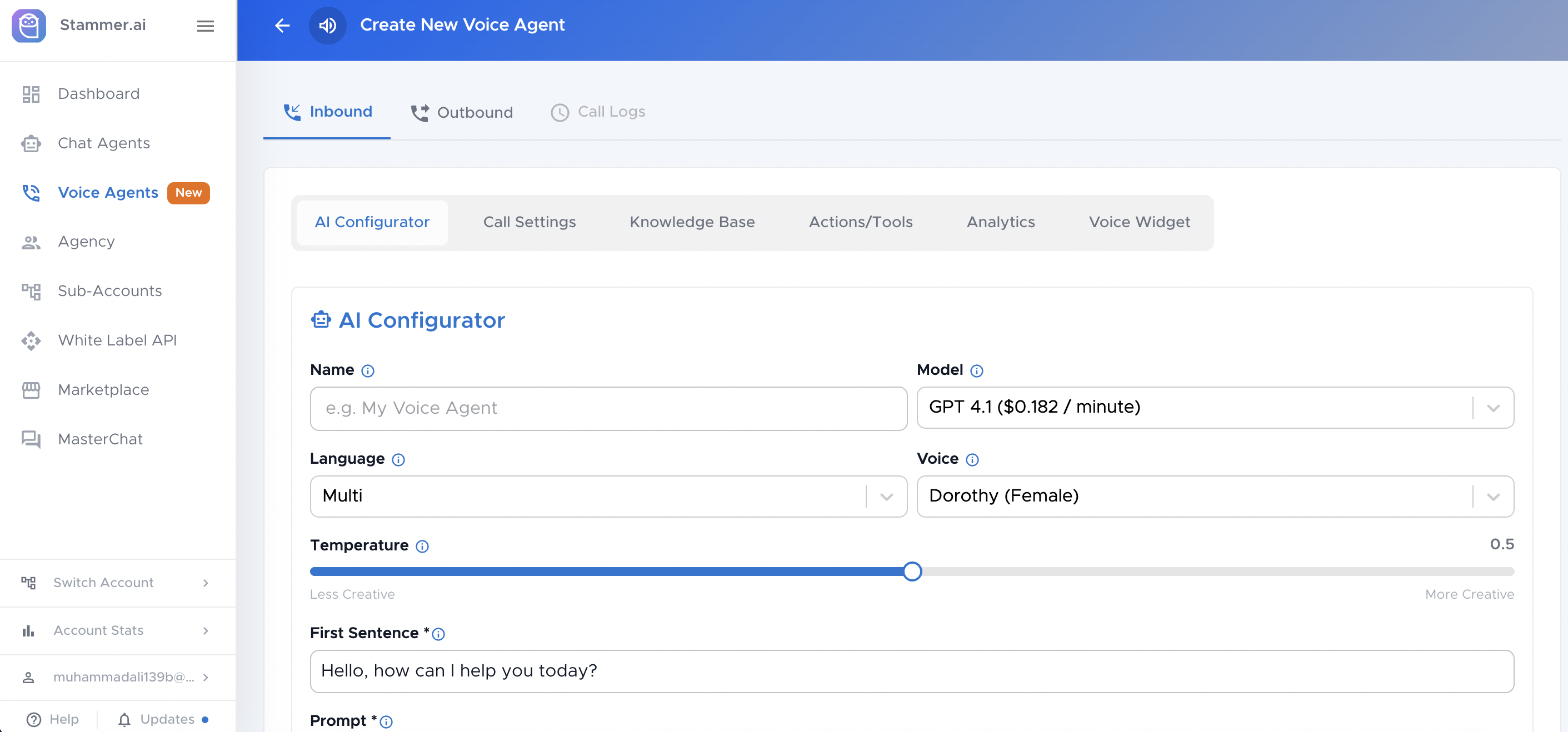
Creating an AI Voice agent does not require a developer or a tangle of separate tools. The basic path looks like this:
Build an outbound voice agent and give it a clear name, role, and script.
Connect it to a CRM trigger so the calls fire on the events you choose.
Set your guardrails, including calling hours, disclosure, and opt-out handling.
Launch it under your own white-label dashboard and invite your client to their branded portal.
From there, you watch the results, adjust the script over time, and add more clients to the same system.
Frequently Asked Questions
Is AI outbound calling legal?
Yes, when you follow the rules. AI calls fall under the TCPA and related state and federal regulations. Stay compliant on consent, calling hours, disclosure, and do-not-call lists and you are on solid ground.
Do I need consent to make AI calls?
For consumer telemarketing, generally yes, in the form of prior express written consent. For business to business calls the picture is more nuanced, but having a real relationship or an opt-in is the safe standard.
Can AI call cold leads?
It can, as long as the calls meet the regulatory requirements for your jurisdiction and call type. Cold consumer outreach carries the most risk, so confirm your legal basis first.
Does AI outbound calling replace sales reps?
No. It takes the repetitive, high volume work off their plate, such as qualifying and reminders, so reps can spend their time on the conversations that need a person.
How much does AI outbound calling cost?
Pricing is usually based on call minutes, with rates that depend on the underlying model. Agencies typically add their own markup on top when reselling.
How is this different from a robocall?
A robocall plays a fixed recording and cannot respond. An AI agent listens, understands, and replies in real time, holding an actual conversation.
Endnote
AI outbound calling gives businesses something they have always struggled to deliver by hand: fast, steady, around the clock outreach that does not slip. For agencies, it gives something just as valuable, a service you can brand, price, and sell on repeat.
Ready to build your first outbound agent? Start a free trial and launch one today.