
Best Conversational AI Platforms in 2026: Compare Top Tools
Businesses are changing the way they communicate with customers. As expectations for faster responses and smoother interactions continue to grow, traditional communication systems are struggling to keep up with the volume and complexity of conversations.
This shift has increased interest in conversational AI, with companies exploring new ways to improve customer experiences and create more efficient communication processes. From startups to large enterprises, organizations are evaluating platforms that can support modern customer engagement needs.
However, the conversational AI space has expanded quickly, with different platforms offering different approaches and features. Understanding the differences between these solutions is becoming essential for businesses looking to invest in the right technology.
In this guide, we will compare the best conversational AI platforms in 2026, looking at how they differ, where they fit, and what businesses should know before making a decision.
What Are Conversational AI Platforms?
Conversational AI platforms are software solutions that help businesses create automated conversations with customers and users across digital channels. They use AI to understand messages, identify intent, and generate relevant responses.
These platforms combine technologies such as:
Natural language processing (NLP): Helps systems understand human language and customer requests.
Machine learning: Allows platforms to improve responses based on interactions and data.
Knowledge bases: Provide access to business information for more accurate answers.
Automation workflows: Enable AI systems to complete tasks and connect with other business tools.
Businesses use conversational AI platforms in different areas where communication takes up significant time and resources. Many companies are now using AI chatbot solutions trained on their own business data to handle customer interactions across websites and digital channels.
Customer support is one of the most common applications. Companies use conversational AI to handle routine customer questions, provide instant responses, and guide users through simple issues. Instead of waiting for an available representative, customers can get help with common requests while support teams focus on more complex cases.
Sales teams also use conversational AI to improve how they interact with potential customers. AI-powered conversations can help visitors get product information, answer early-stage questions, and keep prospects engaged before a sales representative becomes involved.
For lead generation, conversational AI helps businesses collect important details from potential customers through AI lead generation tools. By asking relevant questions and understanding customer needs, these systems can help sales teams identify stronger opportunities and prioritize follow-ups.
Appointment-based businesses use conversational AI to simplify scheduling. Customers can check availability, request appointments, and receive confirmations without waiting for manual assistance. This is especially useful for businesses that handle a high volume of bookings.
Beyond customer-facing tasks, conversational AI can support internal workflows as well. Companies can use these systems to help employees find information, answer common internal questions, and reduce time spent on repetitive administrative tasks.
How Conversational AI Platforms Work
Conversational AI platforms work through a combination of language understanding, business knowledge, and automated workflows. The process usually happens in three stages:
1. Understanding User Intent
The first step is understanding what the user is asking and what they need. Conversational AI systems analyze the message, identify the intent behind it, and use the context of the conversation to provide a more relevant response.
A customer asks about changing an order, the system needs to understand the request, recognize the customer's situation, and determine the right information or action required.
2. Generating Responses and Taking Actions
After identifying the user's intent, the platform generates a response using its available knowledge sources and configured workflows. Depending on the business use case, it can:
Provide answers using company information
Retrieve details from connected systems
Trigger automated workflows
Complete actions such as scheduling appointments through AI appointment setters
Many conversational AI platforms also integrate with tools like CRMs, help desks, and business applications, allowing them to provide more accurate responses and support real-time tasks.
3. Improving Through Data and Training
Conversational AI platforms improve through ongoing updates, conversation history, and performance analysis. Businesses can refine their systems by adding new knowledge sources, reviewing previous interactions, and adjusting workflows based on customer needs.
This continuous optimization helps AI systems become more accurate, handle a wider range of conversations, and better support changing business requirements.
AI Agents vs Chatbots vs Voice Assistants: What Is the Difference?
Conversational AI includes different types of systems designed for different communication needs. While chatbots, voice assistants, and AI agents all use AI to interact with users, they differ in how they communicate and what tasks they can handle.
The main difference comes down to the level of interaction and automation. Chatbots are commonly used for text-based conversations, while voice assistants focus on spoken interactions.
AI agents combine conversational abilities with workflows and integrations, allowing them to complete more complex tasks beyond answering questions. Businesses can also deploy AI voice agent solutions for phone-based customer interactions and automated conversations.
Key Features to Look For in Conversational AI Software
Choosing conversational AI software depends on more than just its ability to answer questions. Businesses need platforms that can understand users, connect with existing systems, and support real workflows. The differences between platforms often become clearer when looking at how they handle the following areas:
Natural Language Understanding
A conversational AI platform should be able to understand the meaning behind user requests instead of relying only on exact keywords. Strong natural language understanding helps systems handle different ways of asking the same question and maintain more relevant conversations.
Custom Knowledge Training
Businesses often need AI systems that reflect their own information, policies, and services. Platforms with knowledge training capabilities allow companies to add relevant data sources so responses are aligned with their specific needs.
Integrations and Automation
Integrations allow conversational AI systems to work alongside existing business tools. Connecting with platforms such as CRMs, help desks, and scheduling systems enables AI to support complex conversations.
Omnichannel Support
Customers interact through different channels, including websites, messaging platforms, and voice. A platform that supports multiple channels helps businesses provide a consistent experience across customer touchpoints.
Analytics and Conversation Insights
Analytics help businesses understand how their AI system is performing. Conversation data can show common customer questions, areas where users need more assistance, and opportunities to improve workflows.
Best Conversational AI Platforms in 2026
The conversational AI market includes platforms built for different business requirements, from designing customer conversations to automating workflows and deploying AI-powered assistants.
Below are some of the leading conversational AI platforms businesses are using in 2026, along with the areas where each solution is commonly applied.
Stammer AI
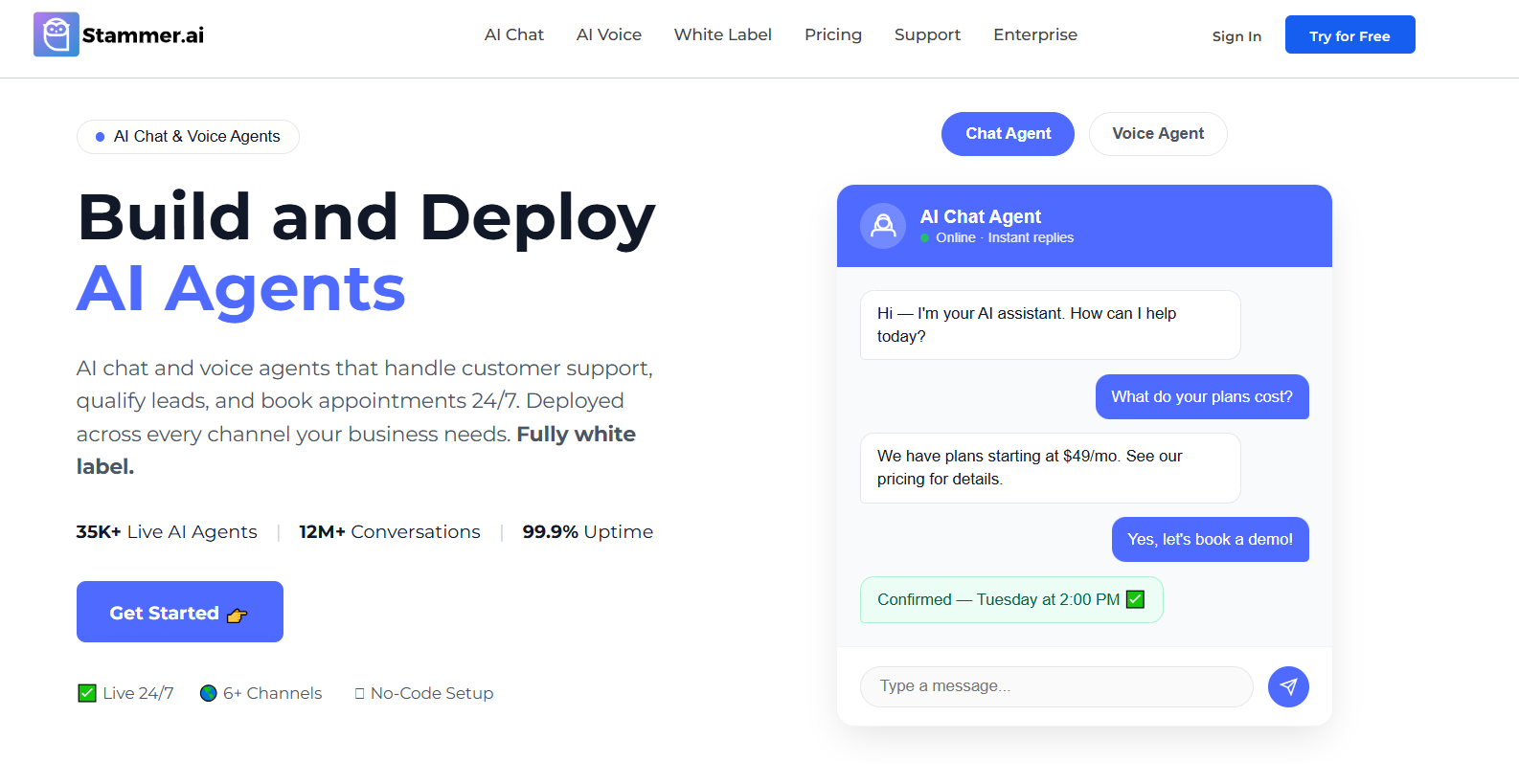
Stammer AI is a conversational AI platform built around creating custom AI agents for businesses and agencies. Instead of focusing only on chatbot conversations, the platform combines chatbot creation, voice AI, and workflow automation in one environment.
Businesses can train AI assistants using their own data sources, allowing them to create tailored conversations rather than relying on generic responses. These assistants can be used across areas such as customer support, lead capture, appointment scheduling, and sales conversations.
A key part of Stammer AI’s positioning is its white-label capability. Agencies can use Stammer as a white label SaaS platform to create and sell AI solutions under their own brand, making it relevant for businesses that want to offer AI services without building the underlying technology themselves.
Stammer AI is a fit for organizations that need customizable conversational experiences and want more control over how their AI assistants are built, trained, and deployed.
Voiceflow
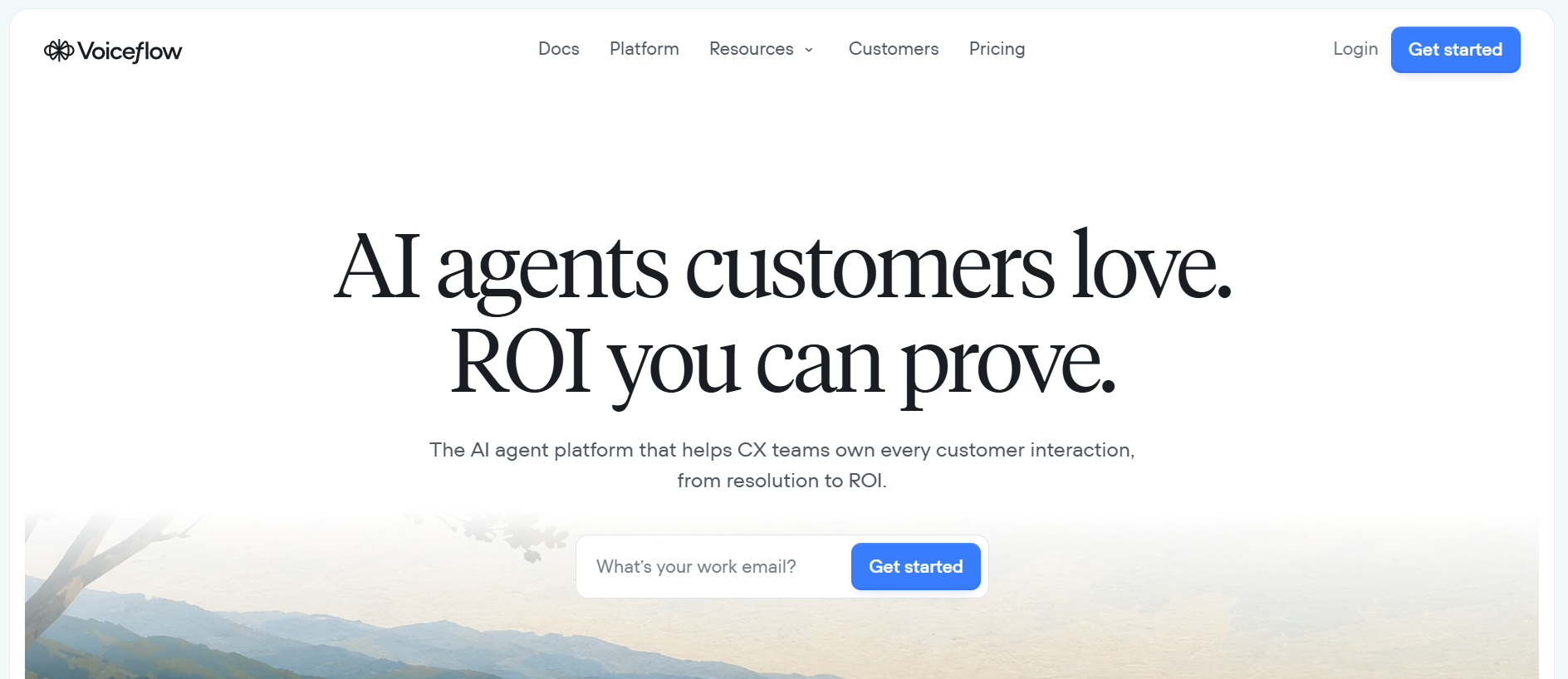
Voiceflow is a conversational AI platform focused on designing and building AI-powered customer experiences. Unlike platforms that primarily focus on deploying ready-made assistants, Voiceflow places more emphasis on the planning, testing, and refinement of conversational flows.
Its visual builder allows teams to create and manage complex conversation paths before deployment. This makes it useful for organizations where conversation design is a major part of the customer experience.
Teams commonly use Voiceflow to build:
AI chat experiences for websites and applications
Voice-based assistants
Interactive prototypes for testing user journeys
Structured conversation workflows
Voiceflow is often considered by product teams, designers, and developers who need a collaborative environment to design and improve conversational experiences before launching them at scale.
Botpress
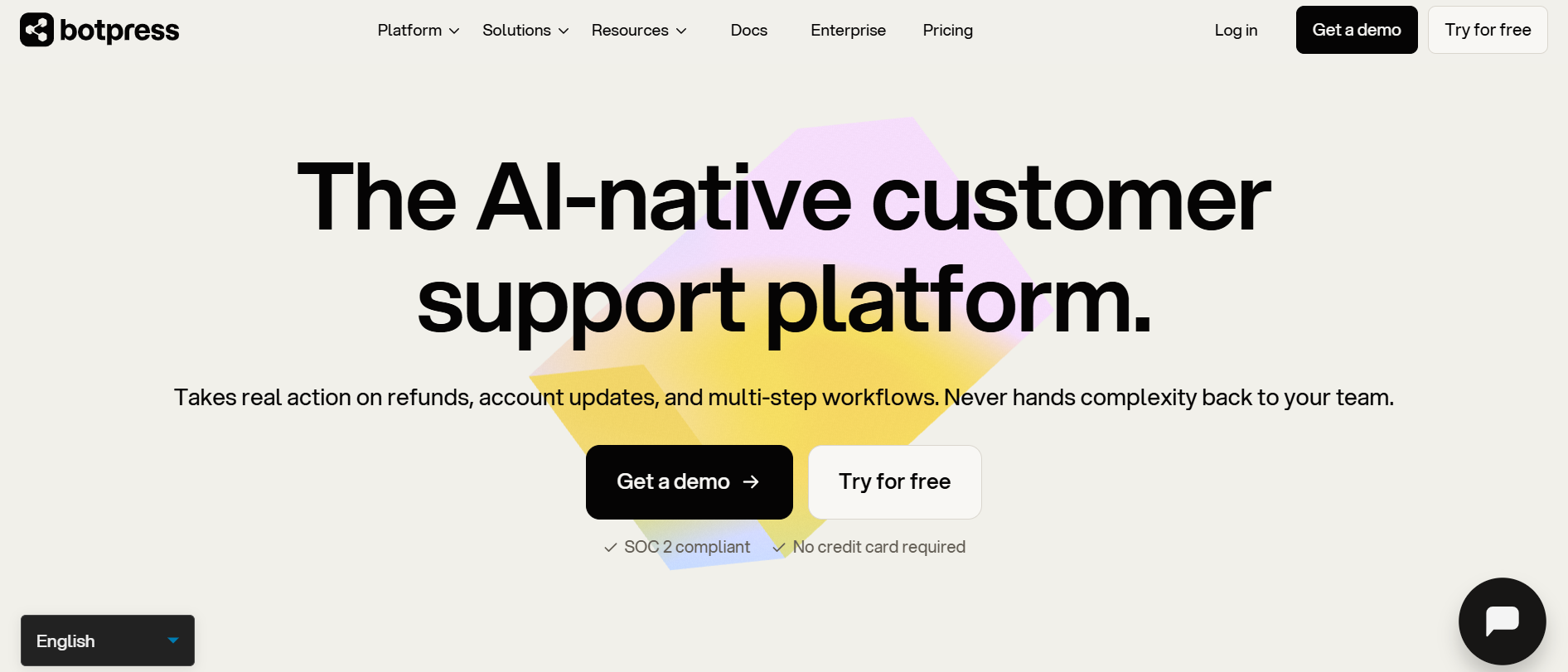
Botpress is a conversational AI platform built for teams that want more control over how their AI assistants are created and managed. While some platforms focus heavily on ready-made conversational experiences, Botpress gives users more flexibility to design custom chatbot logic and workflows.
The platform provides a visual development environment where teams can create conversation flows, connect knowledge sources, and adjust how an AI assistant handles different scenarios. This makes it useful for businesses with specific requirements that go beyond simple question-and-answer interactions.
Botpress is often considered by teams that want to customize their chatbot experience at a deeper level, especially when they need control over conversation behavior, integrations, and automation logic.
Its approach is particularly relevant for businesses that have technical resources available and want to build AI assistants tailored around their own processes rather than adapting to a fixed chatbot structure.
Lindy
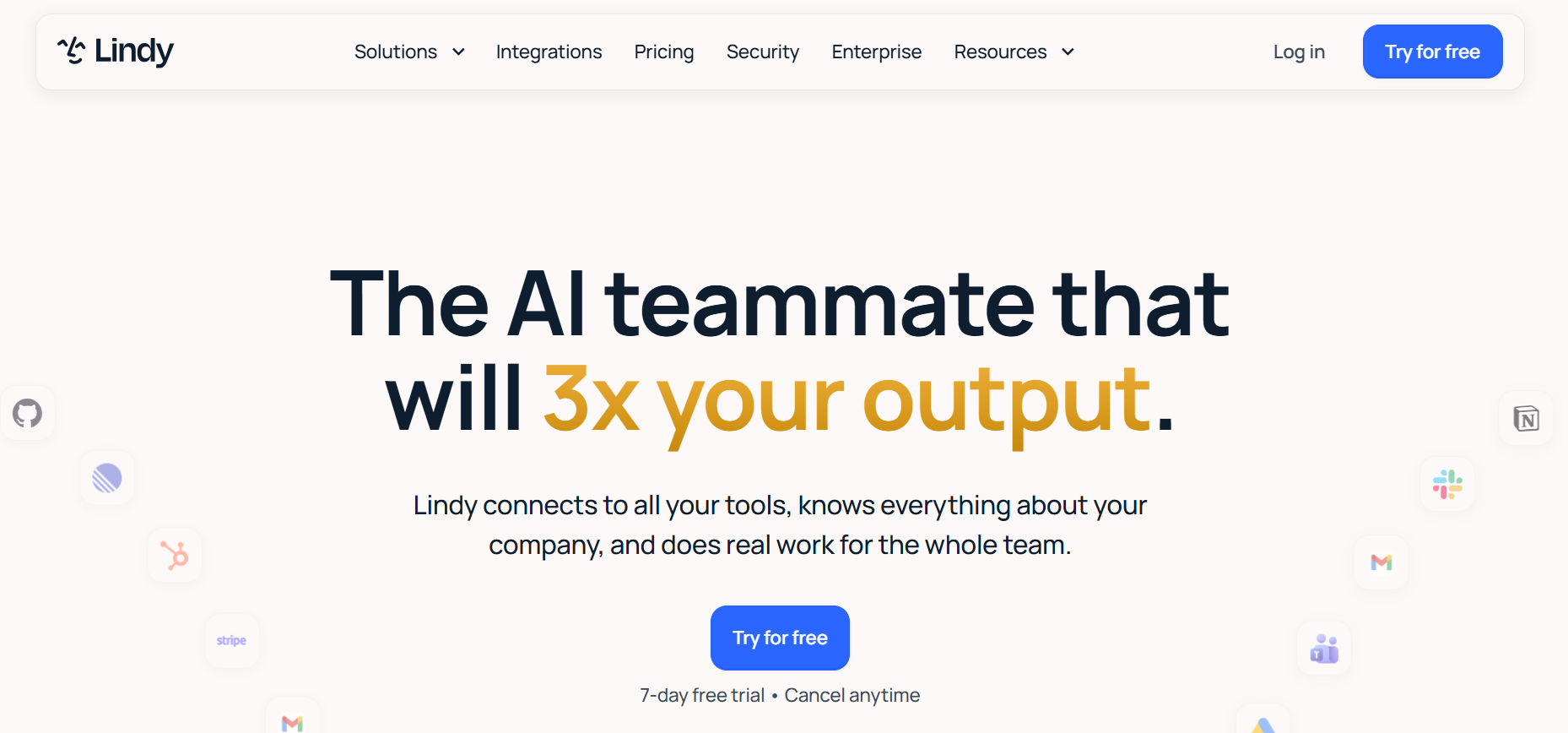
Lindy is an AI assistant platform focused on automating repetitive business tasks through customizable AI workflows. Unlike platforms built mainly around customer-facing conversations, Lindy focuses more on helping individuals and teams create AI assistants that handle everyday operational tasks.
The platform connects with existing tools and allows users to build assistants that can manage different parts of their workflow, such as:
Managing emails and communication
Organizing scheduling tasks
Automating repetitive administrative work
Connecting information across different business applications
Lindy is designed for users who want to create AI-powered assistants without building complex automation systems from the ground up. Its workflow-based approach makes it useful for teams looking to reduce manual processes and improve day-to-day productivity.
The platform is a consideration for businesses that need AI support across internal operations, especially when the goal is automating routine tasks rather than creating customer-facing conversational experiences.
Relevance AI
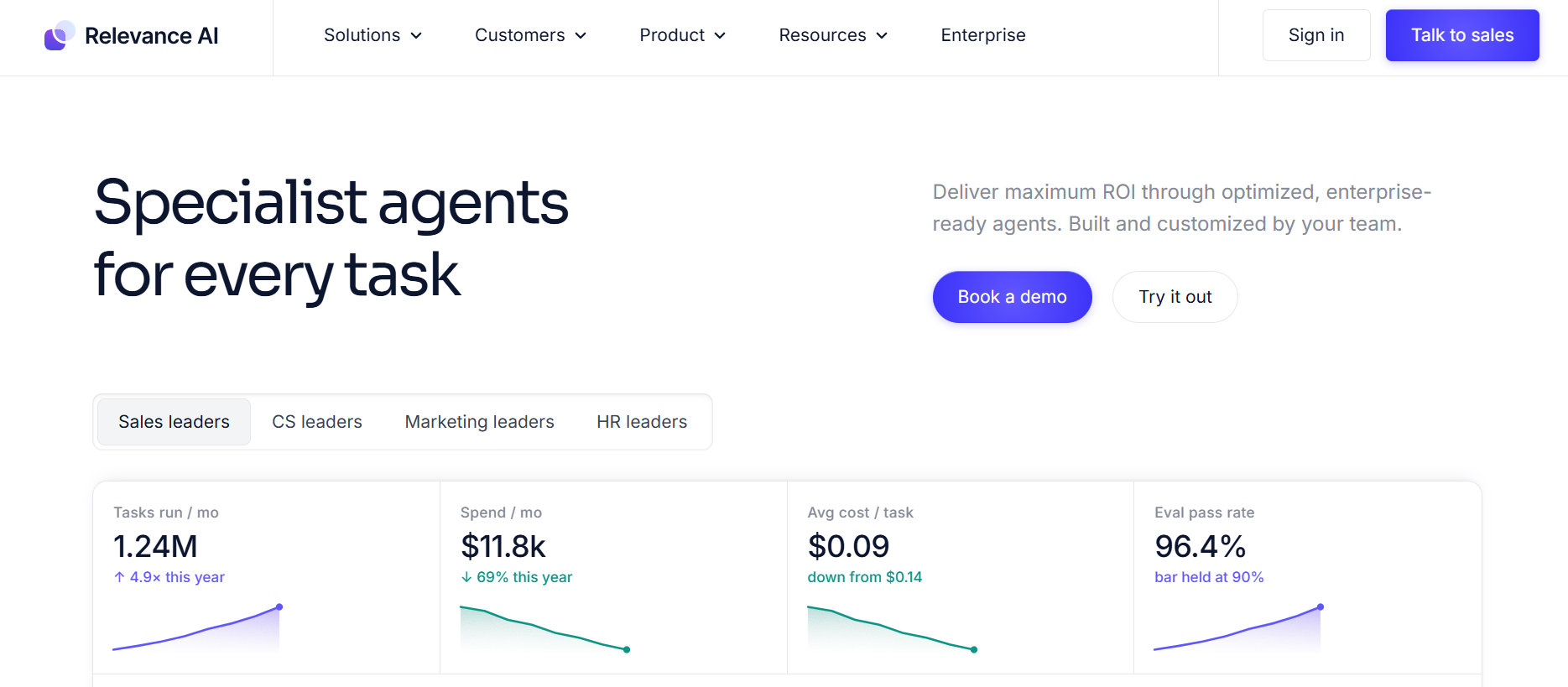
Relevance AI is a platform focused on building AI-powered workflows and multi-agent systems for business operations. Rather than being centered only around customer conversations, it is designed for organizations that want to create AI teams capable of handling more complex operational tasks.
The platform allows businesses to build and manage AI agents that can work together, use company data, and support different workflows. This makes it relevant for teams exploring how AI can be applied beyond individual tasks and integrated into broader business processes.
Relevance AI is often used for workflows that involve:
Research and data analysis
Automating repetitive business processes
Creating task-specific AI agents
Connecting AI systems with existing business operations
One of the platform’s key focuses is helping businesses experiment with AI-driven automation at an operational level. It can be useful for teams that want to design specialized AI workflows and explore multi-agent approaches for handling complex processes.
Zapier Agents
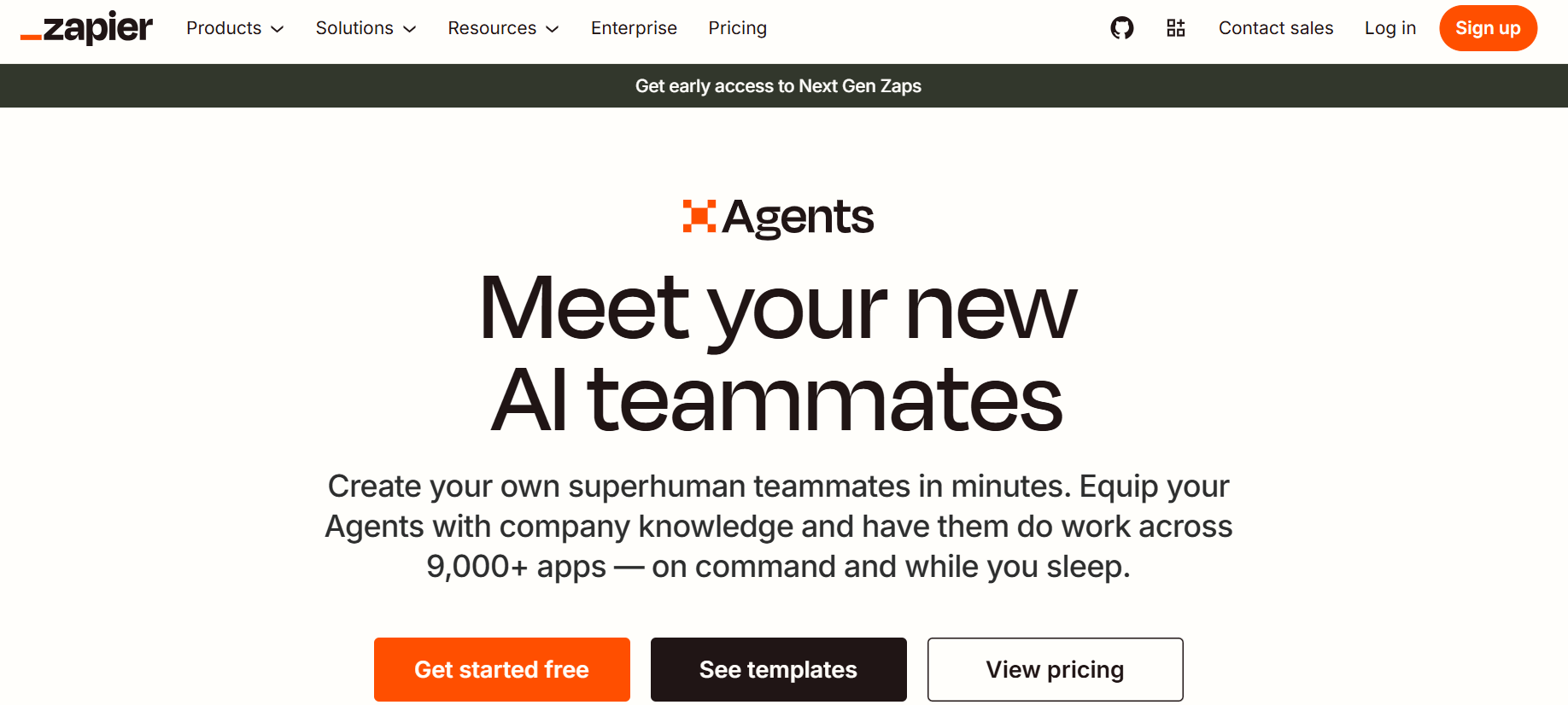
Zapier Agents brings AI assistants into the broader automation ecosystem of Zapier, allowing businesses to connect AI capabilities with the apps and workflows they already use. Its main focus is helping users automate tasks by combining AI decision-making with existing business processes.
The platform builds on Zapier’s large integration network, making it useful for businesses that want AI assistants to work alongside tools already used by their teams. Instead of creating isolated AI conversations, users can connect agents with different applications to move information and trigger actions across workflows.
Zapier Agents can support workflows such as:
Moving information between business applications
Automating repetitive team tasks
Creating AI-powered assistants connected to existing tools
Reducing manual steps in everyday processes
The platform is particularly relevant for teams already using automation tools and looking to add AI capabilities without replacing their current systems. Its strength comes from combining AI-driven actions with existing app connections, making it a practical option for businesses focused on workflow automation.
Microsoft Copilot Studio
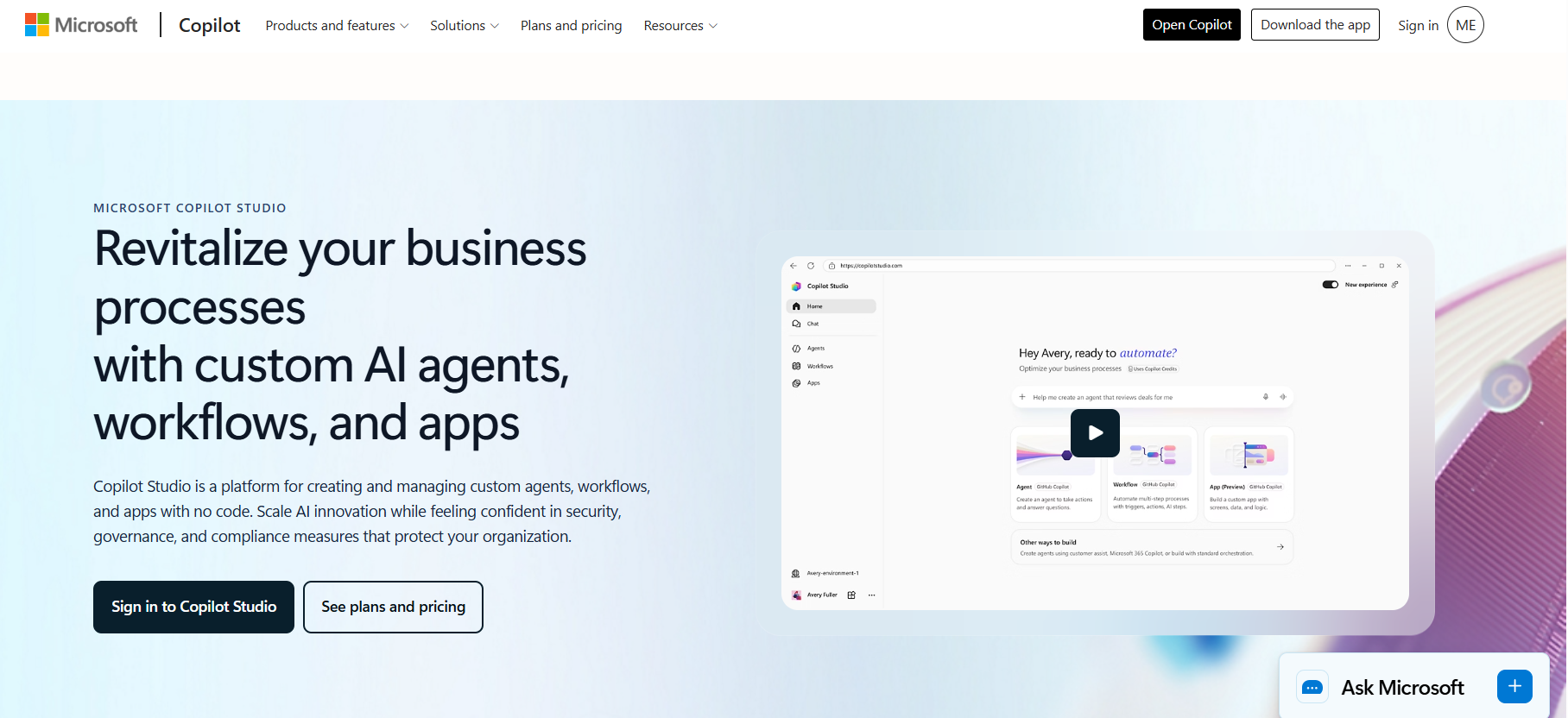
Microsoft Copilot Studio is a conversational AI platform built around creating custom AI assistants that work within the Microsoft ecosystem. It allows organizations to build copilots that can interact with users, access business information, and connect with existing Microsoft tools.
The platform is closely tied to products such as Microsoft 365, Power Platform, and Azure, making it a natural option for companies already using Microsoft services across their operations.
Organizations can use Copilot Studio to create assistants for different business scenarios, including:
Employee support and internal knowledge access
Customer-facing assistance
Workflow automation through Power Platform connections
Business process support using existing data sources
A major focus of the platform is enterprise integration. Companies that already rely on Microsoft’s ecosystem can use Copilot Studio to extend their existing workflows with AI capabilities while maintaining control over data, permissions, and business processes.
Conversational AI Platforms at a Glance
Benefits of Using Conversational AI Solutions for Businesses
Conversational AI solutions help businesses improve how they manage communication, operations, and customer experiences. The value comes from reducing repetitive work while making interactions faster and more consistent.
Faster Response Times
Customers expect quick answers, especially when they need support or information. This is why many companies are adopting AI customer support solutions to improve response speed and reduce repetitive workloads. Conversational AI allows businesses to respond instantly to common requests instead of making users wait for an available team member. This helps companies provide support beyond traditional working hours and reduces delays during periods of high demand.
More Consistent Customer Experiences
Maintaining consistent communication can be difficult when multiple teams handle customer interactions. Conversational AI platforms can provide responses based on approved business information, helping ensure customers receive accurate and consistent answers across different channels.
Reduced Manual Work
Many business teams spend significant time handling repetitive tasks and routine questions. Conversational AI can take care of these interactions, allowing employees to focus on tasks that require human judgment and attention. The result is a more efficient workflow without adding unnecessary workload to existing teams.
Easier Scaling
As businesses grow, managing a larger volume of conversations can become challenging. Conversational AI platforms allow organizations to handle more interactions without increasing support resources at the same pace.
This makes them useful for companies that need flexible communication systems that can grow alongside their operations.
Better Understanding of Customer Interactions
Conversations with customers can provide valuable insights into common concerns, preferences, and areas for improvement. Many conversational AI platforms offer analytics that help businesses identify patterns and improve their communication strategies over time.
How to Choose a Conversational AI Platform
Choosing a conversational AI platform requires looking beyond individual features and focusing on how well the solution matches business goals, workflows, and future needs.
1. Define Your Main Goal
Start by identifying why your business needs conversational AI. A company looking to improve customer communication may have different requirements from one trying to automate internal processes or create AI solutions for clients. A clear goal helps eliminate platforms that do not match the intended outcome.
2. Consider Your Deployment Needs
Think about where and how the AI system will be used. Some businesses may need a solution for a specific channel, while others may require support across multiple customer touchpoints or departments. Agencies exploring AI services can also learn more about starting an AI automation agency and building solutions for clients. Understanding these requirements helps businesses choose a platform that fits their current setup.
3. Check Customization Flexibility
Every business has different processes, brand guidelines, and customer expectations. A suitable platform should allow companies to adjust the AI experience based on their requirements rather than relying on a one-size-fits-all approach. Customization plays an important role in creating interactions that feel relevant to users.
4. Think About Future Growth
A platform should support changing business needs over time. Companies should consider whether the solution can handle increasing conversation volumes, new workflows, and expanding automation requirements. Planning for scalability helps businesses avoid switching platforms as their needs evolve.
FAQs
Can conversational AI platforms work with existing business software?
Yes, many conversational AI platforms can connect with existing business software through integrations or APIs. These connections allow AI systems to access relevant information and support workflows that involve tools such as CRMs, help desks, scheduling systems, and other business applications.
How much training does a conversational AI platform need before deployment?
The amount of training depends on the complexity of the AI system and the business requirements. Simple implementations may only require relevant business information, while more advanced deployments may need workflow setup, testing, and ongoing improvements based on user interactions.
Are conversational AI platforms secure for handling customer conversations?
Security depends on the platform, its data practices, and how the system is configured. Businesses should review factors such as data protection measures, access controls, compliance requirements, and how customer information is stored and processed before deployment.
Which industries can benefit from conversational AI platforms?
Conversational AI can support industries where businesses manage frequent customer or employee interactions. Common applications can be found in sectors such as healthcare, finance, retail, real estate, education, and software companies.
How do businesses measure conversational AI performance?
Businesses can evaluate performance through metrics such as response accuracy, customer satisfaction, conversation completion rates, escalation frequency, and improvements in workflow efficiency. These insights help teams identify areas where the AI system can be refined.
Can conversational AI platforms support multiple languages?
Many conversational AI platforms support multilingual conversations, allowing businesses to serve users across different regions and languages. The available language support depends on the platform and the specific AI models it uses.
What is the difference between conversational AI and generative AI?
Conversational AI focuses on managing interactions between users and AI systems, while generative AI focuses on creating new content such as text, images, or other outputs. Modern conversational AI platforms often combine both approaches to create more natural and flexible interactions.
Final Thoughts
Conversational AI platforms are becoming an important part of how businesses manage communication, automate workflows, and improve customer experiences. As the technology continues to develop, companies now have more options than ever, from simple conversational tools to more advanced systems capable of supporting complex business processes.
Choosing the right platform depends on understanding what a business wants to achieve, how much customization it requires, and how the solution fits into existing operations. A platform that works well for one organization may not be the right choice for another.
The best approach is to evaluate conversational AI solutions based on business goals, scalability, and long-term requirements. With the right platform, companies can create more efficient communication systems while building better experiences for both customers and teams.


