
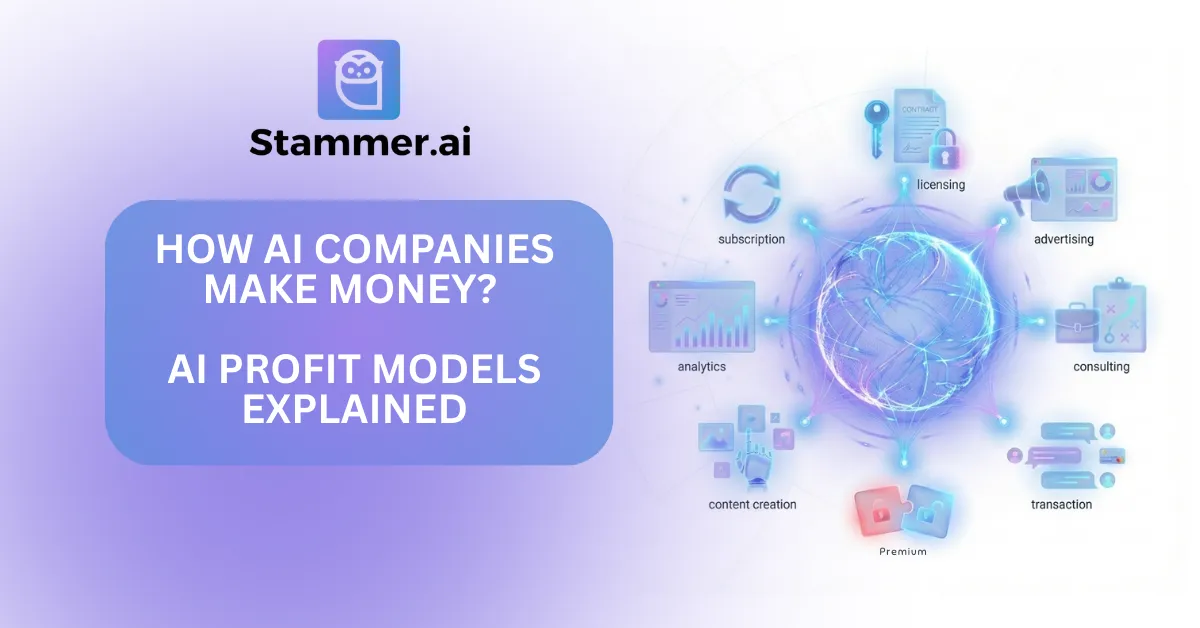
How Do AI Companies Make Money? A Guide to AI Profit Models
When AI started gaining popularity, many businesses saw its potential but struggled with the high costs and complexity of building AI systems. The challenge was clear: while AI could help automate tasks like customer support and lead generation, most businesses didn't have the resources to develop their own AI technology.
As AI technology continues to advance, Large Language Models (LLMs) from big tech companies like OpenAI, Google, and Microsoft have become the leaders in the field. While these companies dominate AI infrastructure, smaller businesses can still take advantage of this technology through white-label AI solutions or API integrations.
This approach lets them focus on solving real business problems, without the need for expensive infrastructure. This article explores how AI companies make money and how businesses can use these solutions to offer AI-driven products.
Practical Solutions for Digital Marketing Agencies
Creating Your Own AI Product
Digital marketing agencies can easily develop AI-driven solutions like chatbots and voice agents that help automate customer support, lead generation, and appointment scheduling. These tools can be fully customized and branded as the agency’s own, enabling them to offer valuable services to clients without the high costs of developing the technology from scratch.
Agencies can build AI products that integrate seamlessly into their existing services, enhancing their value proposition while expanding their service offerings. This allows them to create AI-powered experiences for clients, such as improving communication efficiency and automating time-consuming tasks.
Focus on Problem-Solving Over Infrastructure
Rather than investing heavily in AI infrastructure, agencies can utilize white-label solutions to meet client needs without the complexities of development. These platforms provide the necessary tools to solve real business challenges, such as automating repetitive tasks, improving customer experience, and boosting engagement.
By using existing AI Agency solutions, agencies can focus on delivering results and driving business outcomes for clients, without the burden of managing backend systems or scaling technology. This approach allows agencies to stay agile, offering innovative solutions while keeping costs low and operations streamlined.
How Do AI Companies Make Money?
1. Subscription-Based Models (SaaS)
AI companies often rely on subscription fees as a primary revenue model, providing businesses with access to AI tools such as chat agents, automation systems, and data analytics on a recurring basis. These subscription-based services offer businesses continuous access to the latest AI technology while ensuring steady income for the AI companies.
2. Licensing AI Technology
AI companies often license their proprietary algorithms, platforms, or technologies to other businesses. This allows them to earn royalties or licensing fees whenever another company integrates or uses their AI systems. By licensing their technology, AI firms can generate passive income and scale their operations without having to develop new products for each client.
For agencies, licensing AI technology can be an attractive way to create custom AI solutions for clients. Agencies can license AI tools, adapt them to fit the needs of their clients, and offer those tailored solutions as part of their service offerings. This approach allows agencies to provide advanced AI technology without the need to build it themselves.
3. Advertising and Sponsored Content
Some AI companies incorporate advertising into their platforms, using user data and AI algorithms to optimize ad targeting and improve the effectiveness of digital marketing campaigns. AI-driven advertising tools help businesses reach the right audience with personalized ads, improving click-through rates and return on investment (ROI).
4. Consulting and Custom Solutions
AI companies frequently offer consulting services to help businesses implement AI solutions, such as machine learning models, automation systems, or data analytics platforms. These services often come with a fee for advice, development, and deployment, making it a profitable model for AI firms.
5. Transaction-Based Models
Some AI companies use transaction-based models, charging businesses per interaction or pay-per-use. This means businesses pay based on the number of messages processed or customer interactions handled by AI systems like chatbots or voice agents. For example, a company might charge per chatbot conversation or voice call made.
Agencies can apply this model by charging their clients based on usage volume, such as the number of customer interactions handled or the number of transactions processed by AI-powered systems. This allows agencies to offer flexible pricing and scale their services based on client needs, ensuring a steady income stream tied to the actual usage of AI solutions.
6. Freemium Models
Some AI companies use a freemium model, where they offer basic features of their product or service for free, while charging for advanced features or premium access. This model allows businesses to attract a large user base by offering free, valuable services, and then upselling to those users who need more advanced tools or capabilities.
For example, AI companies might provide free access to basic chatbots or limited AI functionality, with the option to upgrade to a paid version for features like advanced analytics, customization, or priority support. This model creates a low barrier to entry for new users, while still offering opportunities for monetization as users upgrade to premium services.
7. AI-Enhanced Content Creation
Many companies are capitalizing on the growing demand for AI-powered content creation tools. These platforms allow businesses to automate tasks such as writing, video generation, and design, providing quick and cost-effective content solutions.
Agencies can monetize by offering access to these AI-powered content creation platforms. They can help clients generate automated blog posts, social media content, and video production using AI. By reselling these tools or offering them as part of a service package, agencies can diversify their revenue streams while providing high-demand solutions for content marketing.
8. AI-Enhanced Analytics and Business Intelligence
AI-powered analytics tools help businesses analyze large datasets to extract valuable insights and make data-driven decisions. These tools leverage AI to identify trends, predict outcomes, and uncover actionable information that can enhance business strategies. Agencies can resell AI-powered analytics platforms to their clients, providing them with tools for business intelligence and data analysis.
Why Stammer AI is Recommended for White Labeling
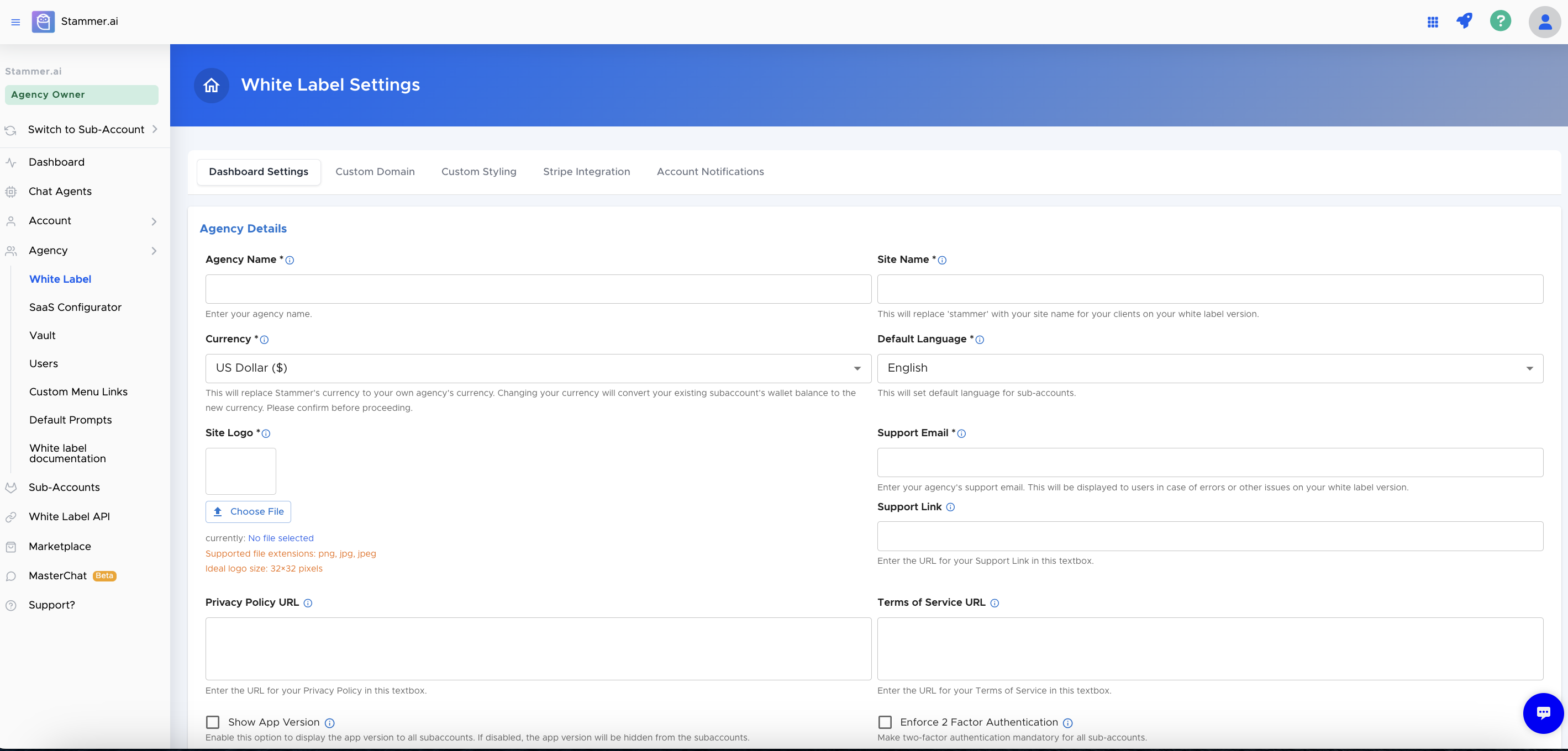
Stammer AI offers a ready-to-deploy white-label solution, making it easy for agencies to quickly create and launch branded AI products for their clients. This means that agencies can start offering AI chat agents and voice assistants without having to invest time and money into extensive development or infrastructure.
With this turnkey solution, agencies can provide high-quality customizable AI tools to their clients, all while saving on the cost and complexity of building AI technology from the ground up. Instead of getting bogged down in developing systems or hiring costly developers, agencies can focus on what matters most: delivering results and growing their client base.
Scalable and Customizable
As agencies expand, their AI solutions need to scale alongside their business. Stammer AI allows for easy scalability, enabling agencies to increase capacity and tailor the solution to meet the growing needs of their clients. Whether a client needs more interactions, additional features, or specialized integrations, agencies can adjust the platform to suit various requirements.
In addition, Stammer AI offers full customization across branding, functionality, and pricing. Agencies can personalize the platform’s look and feel to align with their brand, while also adapting the technology’s features to different industries or business goals. This flexibility makes it an ideal solution for agencies wanting to provide unique AI-powered services without being limited by rigid software constraints.
Conclusion
AI companies generate revenue through various models, such as subscriptions and licensing. By offering scalable and adaptable solutions, these companies create steady income streams while addressing different business needs.
As AI technology grows, companies that effectively use these models can continue to provide valuable services and opportunities for growth. Understanding these methods helps both AI companies and agencies make the most of the AI industry.