Best AI Automation Tools for Marketing Agencies in 2026
Marketing agencies face a scaling problem that becomes harder to ignore as their client list grows. Running automation for one client is manageable with tools designed for in-house marketers, but those same tools often struggle when an agency needs to deliver the same service across ten, fifty, or more client accounts.
Each client may have a different brand, customer base, workflow, and reporting requirement. The agency also has to protect margins while keeping delivery consistent. A tool that works for one internal marketing team may become difficult to manage when every new client requires separate setup, customization, and ongoing maintenance.
Agencies looking to build AI-powered service offerings can explore AI agency services designed specifically for white-label deployment and client management. The right platform should fit into the way agencies sell, deliver, and scale services.
This guide compares AI automation tools based on what matters most for agencies, including multi-client usability, white-label potential, setup efficiency, integrations, and long-term scalability.
What Are AI Automation Tools for Marketing Agencies?
AI marketing automation uses artificial intelligence to improve and automate marketing tasks by analyzing information, understanding context, and helping decide the next action instead of only following fixed instructions. Traditional marketing automation relies on predefined rules, such as sending an email after a form submission or triggering a message after a specific event.
AI automation tools for marketing agencies go further by helping teams handle flexible tasks, such as qualifying leads, responding to customer questions, or routing conversations based on real-time data. Understanding how AI agents in marketing work can help clarify where these tools fit within a broader automation strategy.
AI Automation Tools vs. Marketing Automation Platforms
Marketing automation platforms are designed to manage structured campaigns and workflows based on rules created by a team. Tools like HubSpot or ActiveCampaign can automate tasks such as email sequences, contact management, and campaign follow-ups, but they typically follow the workflow logic that has already been defined.
AI automation tools add another layer by analyzing live inputs and helping determine the most suitable next action, such as responding to a customer request, qualifying a lead, or adjusting an interaction based on new information.
For marketing agencies, the choice is usually not about replacing one with the other. The strongest setups often combine traditional marketing automation platforms with AI-powered tools to handle both predictable processes and situations that require more flexibility.
How Agencies Use These Tools to Build Recurring Revenue
AI automation tools can support agency growth in two different ways. Some solutions can become client-facing services that agencies package and deliver under their own brand, especially in areas like AI chat, voice automation, and AI receptionist services. Other tools are mainly used behind the scenes to improve internal operations, reduce manual work, and make client delivery more efficient.
Understanding this difference helps agencies choose tools based on whether they want to create a new service offering or improve their existing processes. This is particularly relevant when evaluating a white-label AI platform that agencies can customize, brand, and use as part of their own service offering.
What Agencies Should Look For
When choosing AI automation tools, agencies need to evaluate platforms based on how well they support client delivery, operational efficiency, and long-term growth.
White-label and Rebrand Capability: Agencies evaluating white-label AI capabilities should look for control over branding, client management, and deployment options so that client-facing solutions can match their own service identity.
Cost Structure at Multi-Client Scale: Pricing should remain sustainable as client numbers increase, with clear consideration of usage limits, seats, deployments, or account-based costs.
Setup Time per New Client: The right platform should make it faster to launch new client solutions without requiring a completely different process for every account.
Integration With the Existing Agency Stack: Tools should connect smoothly with the CRM, communication platforms, analytics systems, and workflows the agency already uses.
Data Separation Between Client Accounts: Each client should have clearly isolated data, permissions, settings, and automation environments to maintain organization and trust.
Reliability and Support Response Time: Agencies should prioritize platforms with dependable performance and responsive support because client-facing services directly impact their reputation.
Flexibility across different use cases: A strong tool should adapt to different agency needs, whether the goal is improving internal operations or delivering automation services to clients.
Scalability Without Added Complexity: Agencies should choose platforms that can handle growth without creating unnecessary management overhead as more clients and workflows are added.
The Best AI Automation Tools for Marketing Agencies
White-Label Chat and Voice Automation Platforms
1.Stammer AI
Best for: Agencies reselling a branded AI system to clients.
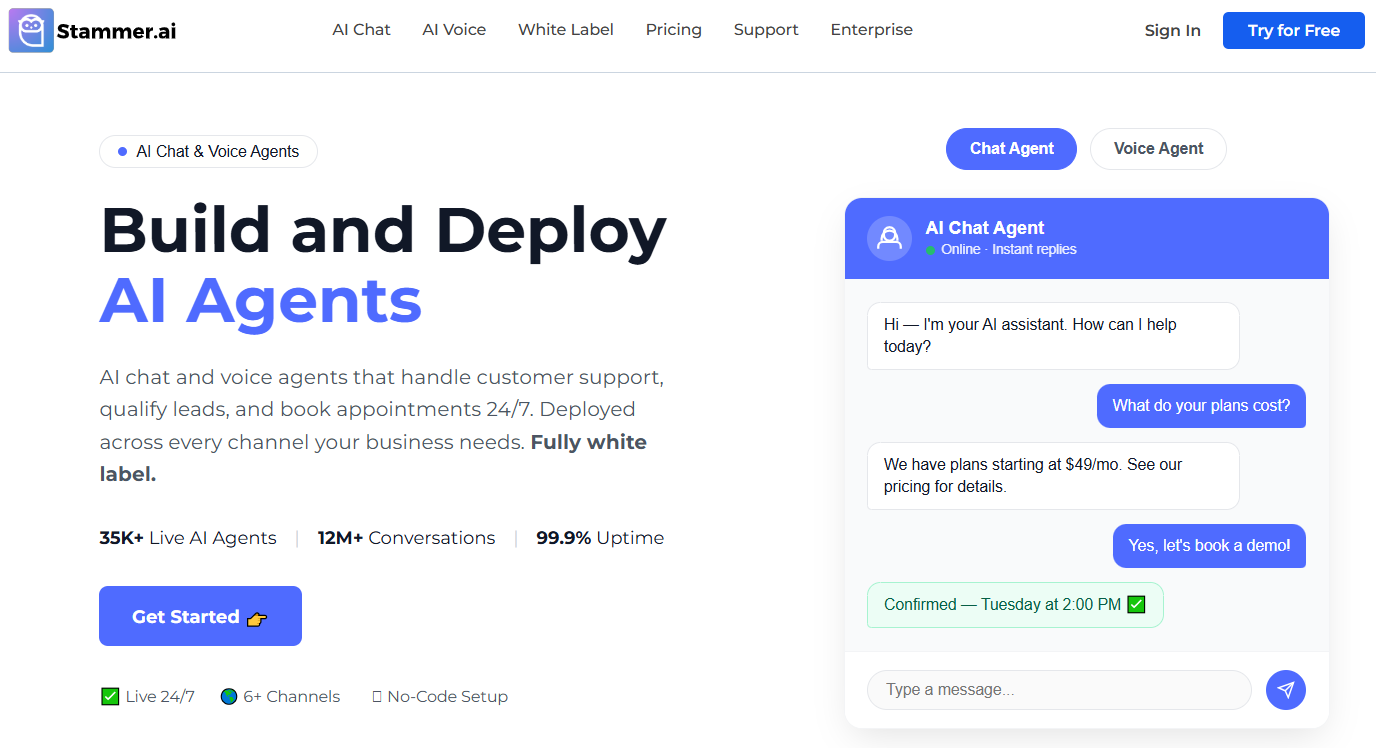
Stammer AI lets an agency build AI chat and AI voice agents under its own brand and deploy them across a client's website, phone line, or both. Each client gets a separate sub-account, so one agency can run entirely different agents, branding, and instructions for a dozen businesses without them touching each other's data.
The same agents handle lead capture and qualification, asking prospects a scripted set of questions and routing qualified ones into the client's existing workflow, which means an agency doesn't need a second platform just to cover that step.
Pricing starts at $49/month with the Standard plan, which includes AI chat agents, AI voice agents, basic integrations, live chat handoff, lead collection, and scheduling. The Pro plan starts at $99/month and adds features like white-labeling, advanced AI models, and reselling capabilities. Enterprise pricing is customized based on business needs.
2.Clay
Best for: Agencies focused on prospect research and lead enrichment.
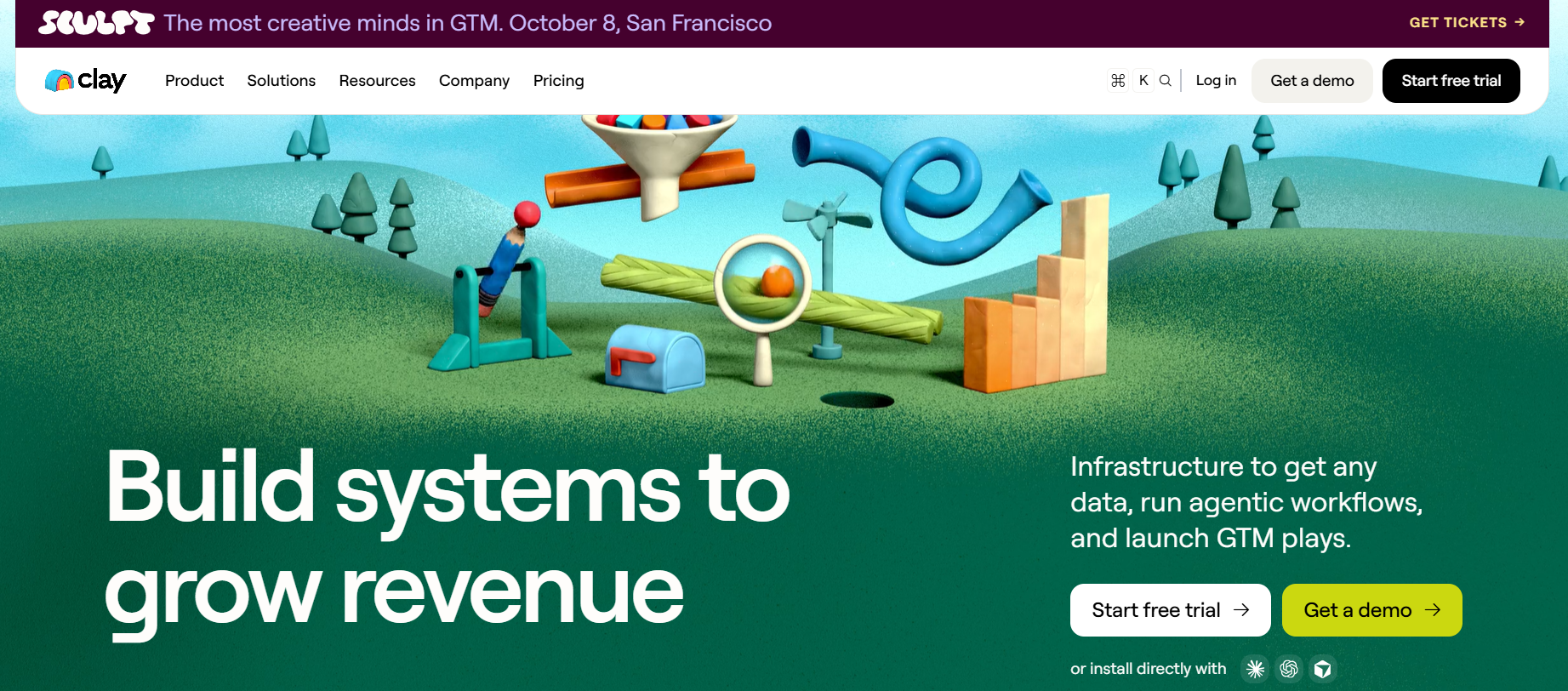
Clay collects and enriches prospect data from multiple sources before outreach begins, filling in firmographic details, verified contact information, and other data points that turn a generic list into a targeted one. It works earlier in the funnel than a conversational tool does. Clay improves what an agency has before a prospect ever responds, but it doesn't handle the live interaction once they do, which is where a chat or voice agent takes over.
Clay uses a usage-based pricing model built around actions and data credits. The Free plan includes 500 actions per month, while the Launch plan starts at $167/month with 15,000 actions per month and 3,000 data credits. The Growth plan starts at $446/month and adds CRM syncing, API integrations, and higher usage limits for teams scaling outbound campaigns. Enterprise pricing is custom for larger GTM teams.
Workflow and Backend Automation
3. Zapier
Best For: Agencies automating repetitive tasks across multiple business applications.
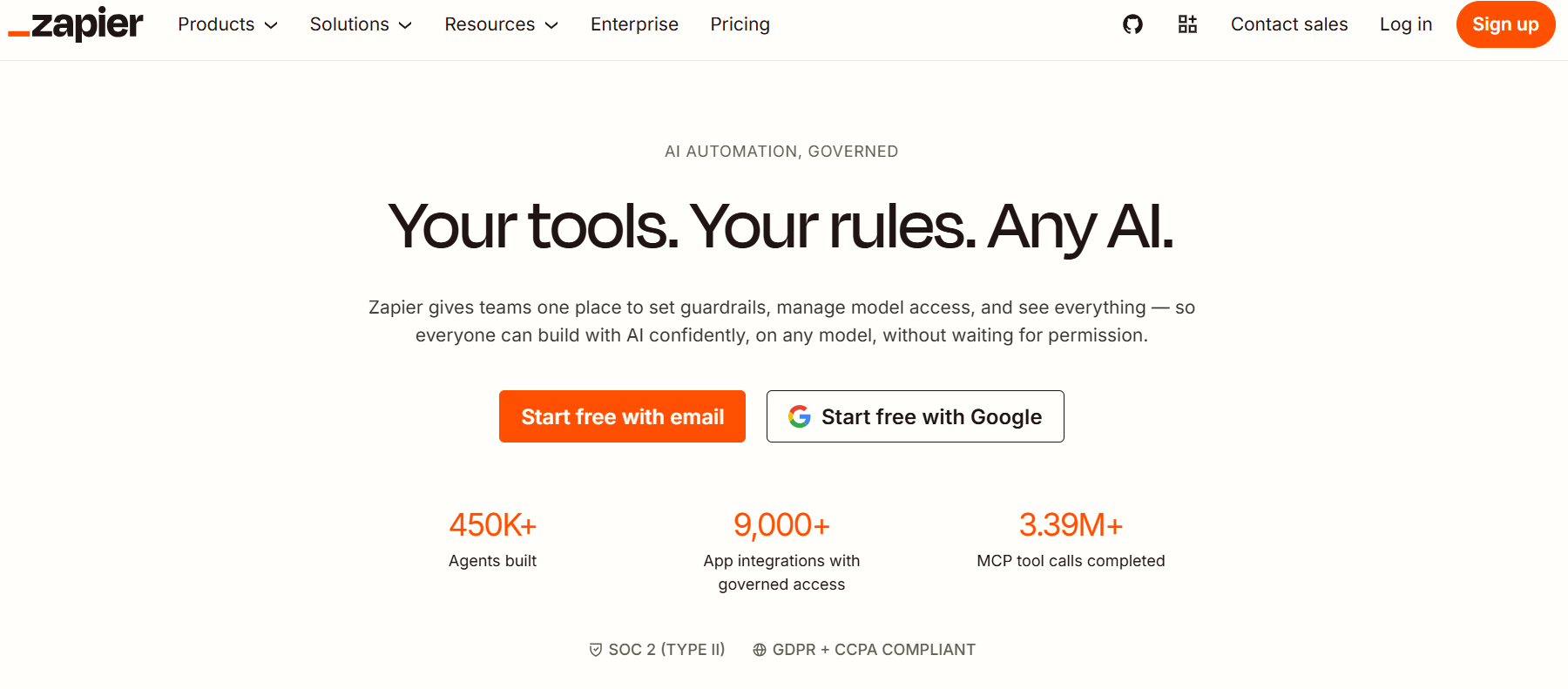
Zapier helps agencies connect different software tools and automate routine actions. It is useful for handling repetitive processes such as moving information between platforms, sending notifications, and keeping systems updated without manual input.
The platform supports thousands of app connections, workflow triggers, automated actions, and data transfers between different systems. Agencies often use it to reduce operational work and keep internal processes organized.
Zapier offers a Free plan at $0/month with 100 tasks per month for basic automation. The Professional plan starts at $19.99/month and adds multi-step workflows, premium apps, webhooks, and advanced automation features. The Team plan starts at $69/month with collaboration features, while Enterprise pricing is customized for organizations needing advanced controls and security.
4.Make
Best For: Agencies creating more flexible and customized automation workflows.
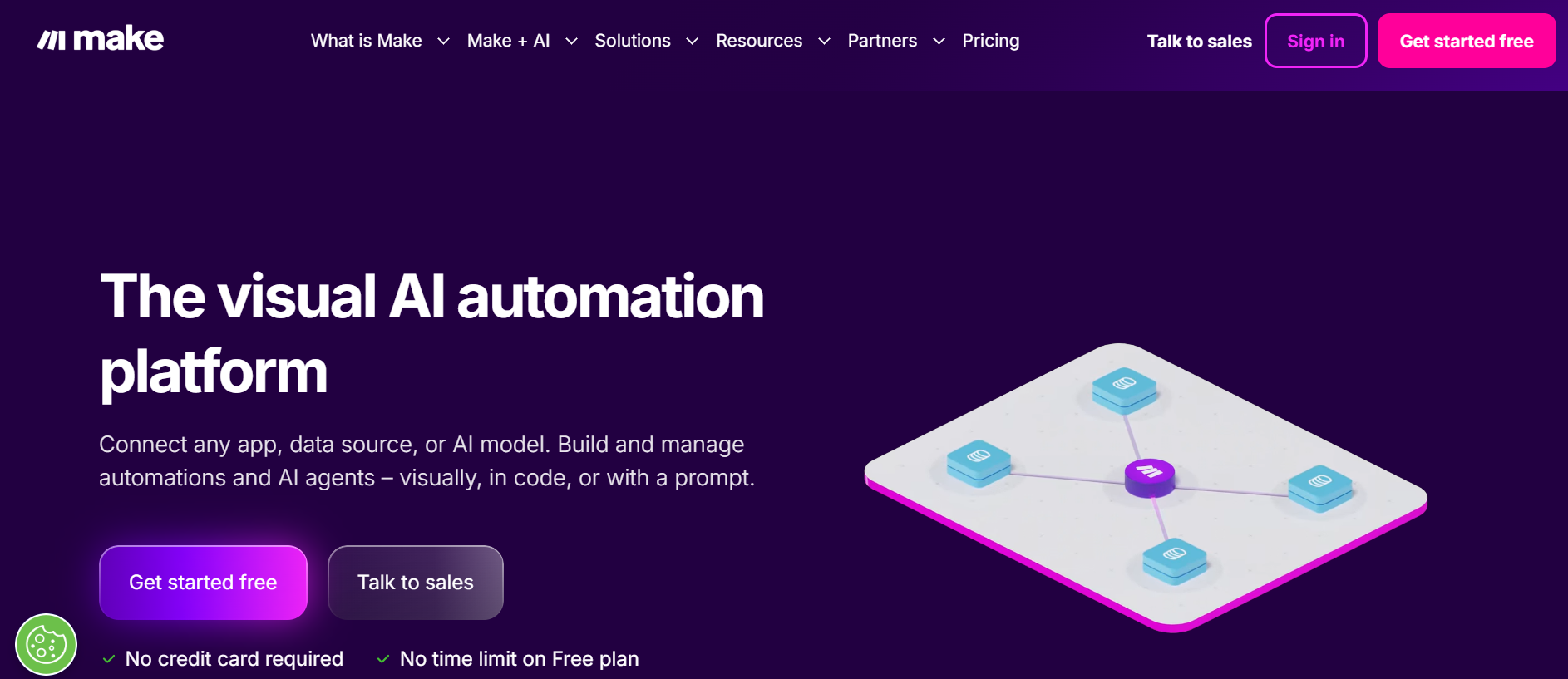
Make provides a visual automation platform that allows agencies to build detailed workflows across different applications. It gives teams control when processes require multiple steps, conditions, and data movements.
The platform supports visual workflow building, API connections, data processing, and complex automation scenarios. It is useful for agencies that need more flexibility than simple trigger-based automation.
Make follows a credit-based pricing model where workflow actions consume credits. The Free plan includes up to 1,000 credits per month, while paid plans start with Core at $9/month for 10,000 credits, Pro at $16/month for 10,000 credits, and Teams at $29/month for 10,000 credits when billed annually. Enterprise plans include advanced security and custom pricing.
5. GoHighLevel
Best For: Agencies managing client marketing operations through one central platform.
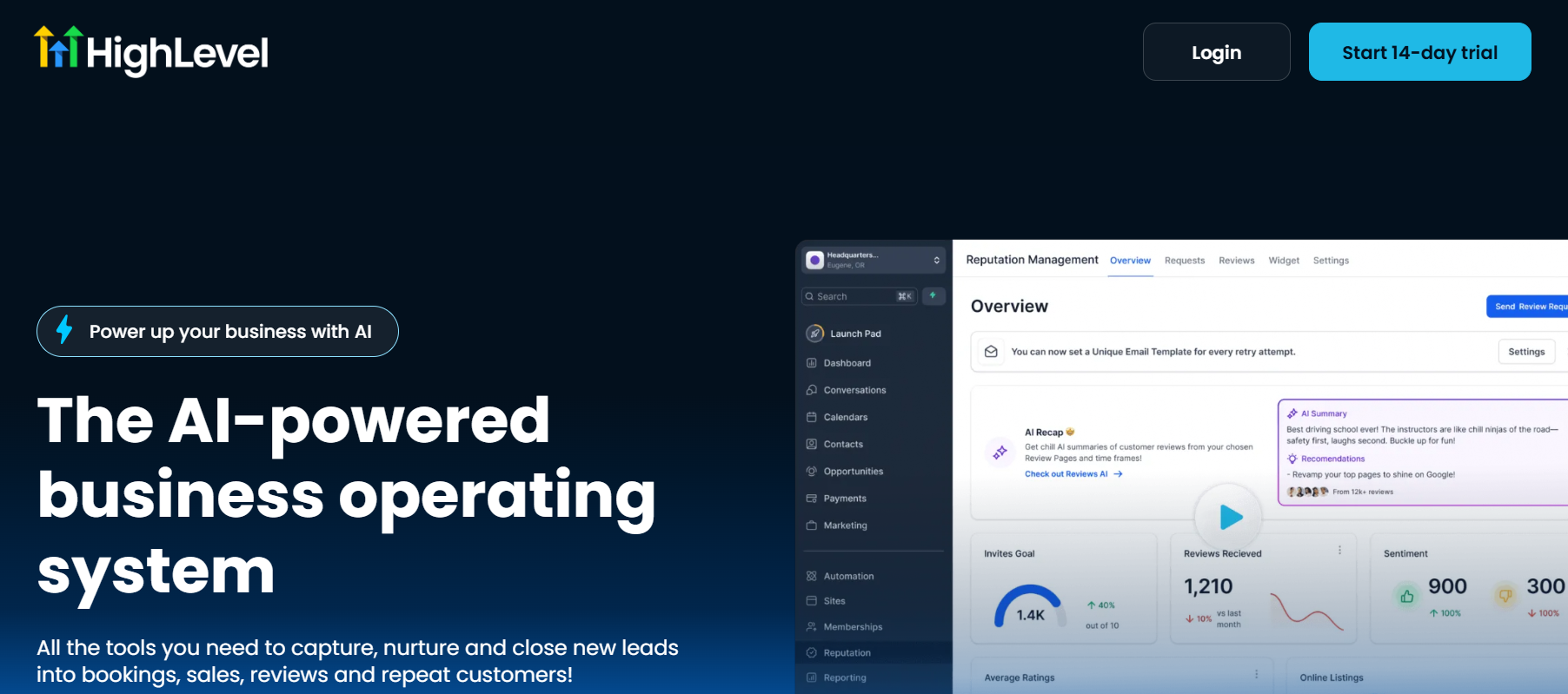
GoHighLevel combines CRM, communication, marketing, and automation features into a platform designed around agency workflows. It is commonly used by agencies that want a central system for managing client accounts and customer interactions.
The platform includes CRM management, marketing automation, funnels, communication tools, and client account features. It can help agencies organize multiple client operations within one environment.
GoHighLevel is priced around agency usage rather than individual users. The Starter plan costs $97/month and supports up to three sub-accounts, while the Unlimited plan costs $297/month and adds unlimited sub-accounts, API access, and branded desktop app features. The SaaS Pro plan costs $497/month and is designed for agencies that want to sell the platform as their own SaaS offering.
Content Production at Scale
6. Jasper
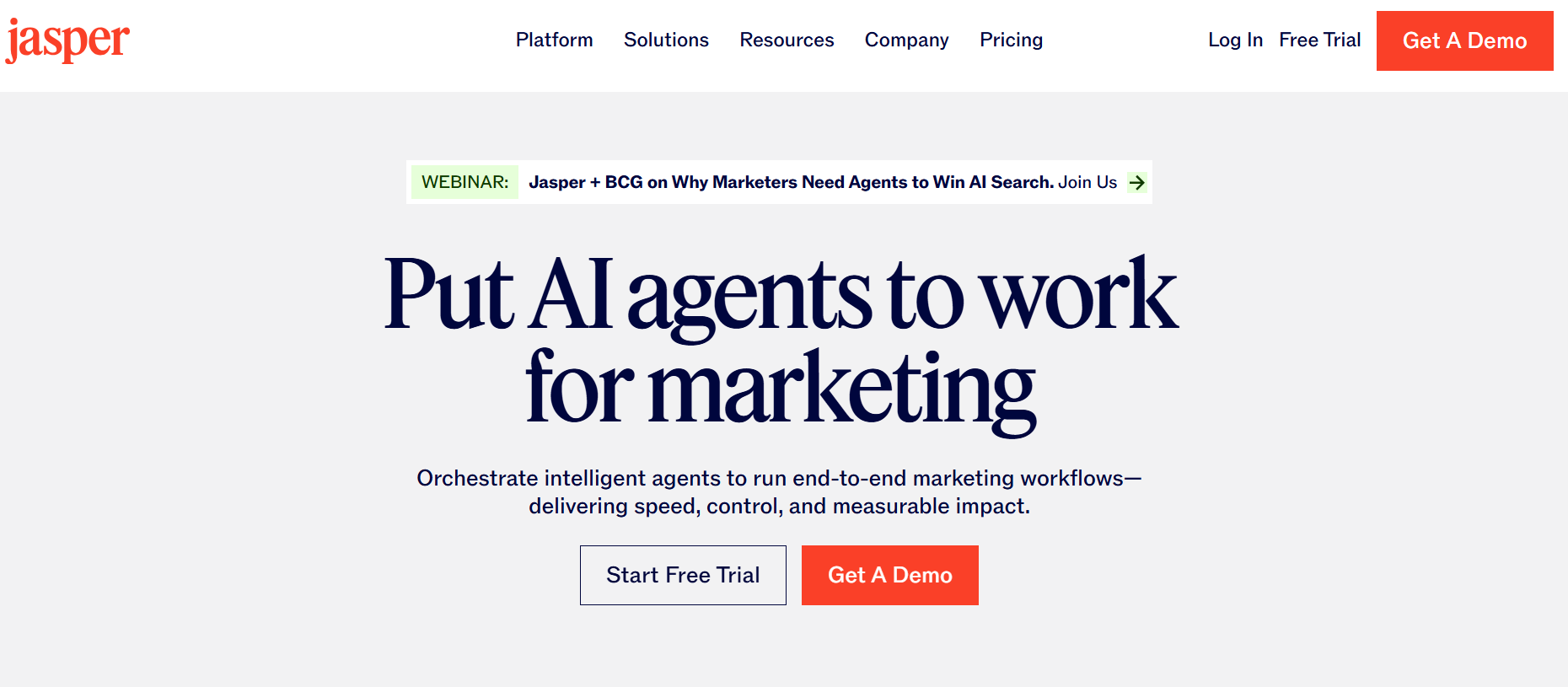
Best For: Agencies creating consistent branded content across multiple clients.
Jasper helps agencies produce marketing content faster while maintaining brand guidelines and messaging consistency. It is useful for teams handling content production for multiple industries, campaigns, and client requirements.
The platform supports AI writing assistance, brand voice management, content templates, and campaign support. Agencies can use it to speed up drafting while keeping human editors focused on strategy and refinement.
Jasper’s Pro plan starts at $69/month per seat when billed monthly or $59/month per seat on annual billing. It includes brand voice controls, content creation features, and marketing workflows, while the Business plan uses custom pricing for teams requiring advanced AI agents, governance, API access, and dedicated support.
7. Copy AI
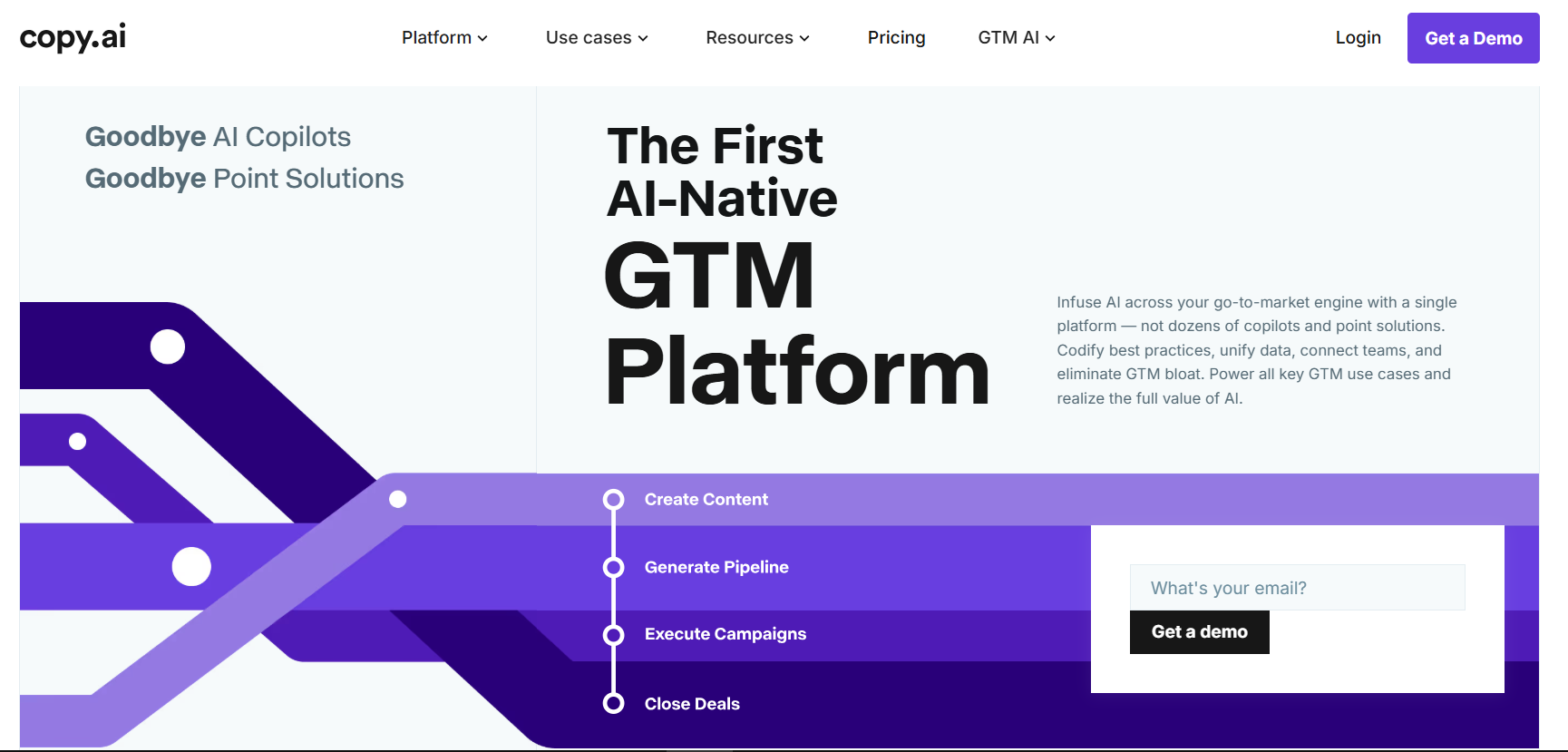
Best For: Agencies producing marketing copy and campaign materials quickly.
Copy AI helps agencies create drafts for marketing campaigns, emails, social posts, and sales materials. It is designed to reduce time spent on repetitive writing tasks while allowing teams to focus on higher-value creative decisions.
The platform provides AI copy generation, workflow automation, content templates, sales writing assistance, and campaign ideation features. Agencies can use it to accelerate content production across different client accounts.
Copy AI offers a Chat plan starting at $29/month for five seats with unlimited words, chat projects, and access to multiple AI models. Its Growth plan supports larger teams with workflow credits and additional features, while Enterprise pricing is customized for organizations needing API access, integrations, security controls, and larger-scale deployment.
Client Reporting and Analytics
8. AgencyAnalytics
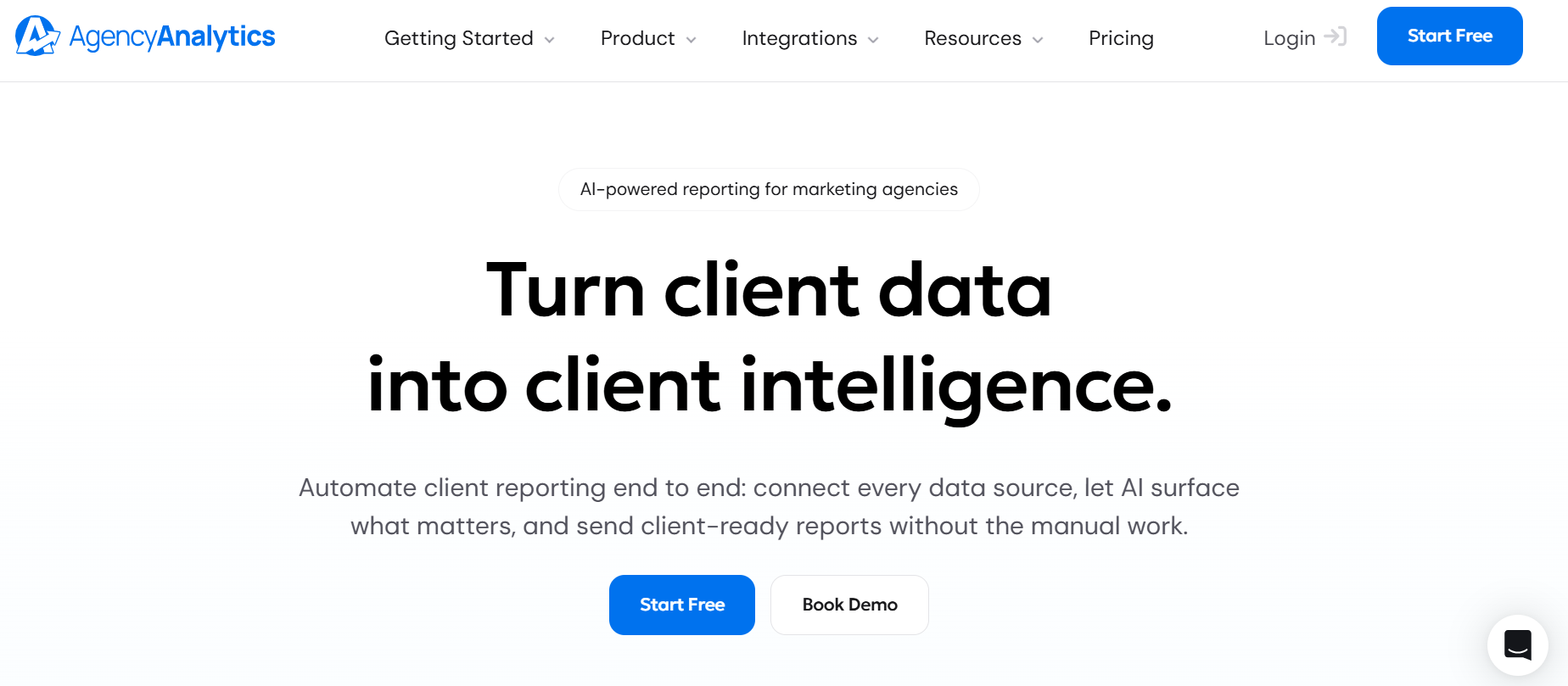
Best For: Agencies creating automated client reporting dashboards.
AgencyAnalytics helps agencies collect marketing data and turn it into client-ready reports. It is designed for teams managing multiple accounts that need consistent reporting without manually creating updates for every client.
The platform supports automated reporting, client dashboards, SEO tracking, marketing integrations, and white-label reports. Agencies can use it to create a more organized reporting process for clients.
AgencyAnalytics uses client-based pricing designed specifically for agencies. The platform starts at $20 per client per month when billed annually and includes unlimited reports, dashboards, users, white-label branding, and integrations. Larger agencies can request Enterprise pricing with custom requirements such as volume discounts and dedicated support.
9. HubSpot Breeze
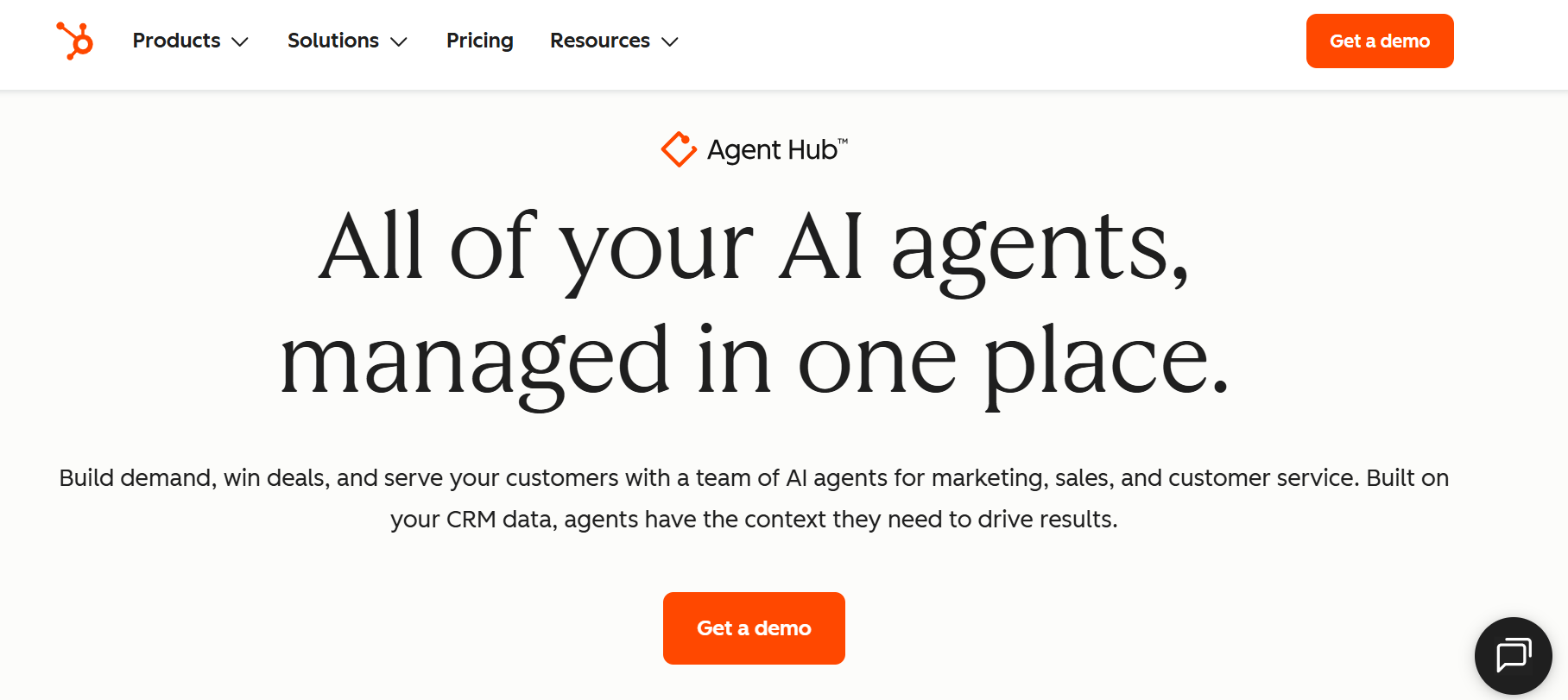
Best For: Agencies already using HubSpot as their CRM and marketing platform.
HubSpot Breeze adds AI-powered features within the HubSpot ecosystem. It helps agencies work with customer data, improve productivity, and automate parts of their marketing and sales workflows.
The platform provides AI assistance, CRM-based insights, productivity tools, and support for marketing and sales activities inside HubSpot. It works best for agencies already built around the HubSpot ecosystem.
HubSpot Breeze is included across HubSpot plans, with AI features expanding depending on the subscription level. Some Breeze Agents use outcome-based pricing, such as $0.50 per customer agent conversation resolution, $1 per prospecting agent lead recommendation, and $0.10 per data agent answer. Higher HubSpot editions unlock additional Breeze features and monthly HubSpot Credits.
How to Choose the Right Stack for Your Agency
Choosing an AI automation stack is more about selecting solutions that match how your agency operates. Before investing, consider these questions:
Are you reselling this directly to clients, or using it to run your own operations?
Client-facing tools need features like branding options, account management, and reliable delivery for external users. Internal tools should focus more on improving efficiency, reducing manual work, and connecting your existing processes.
Will the tool still make financial sense as your client list grows?
A platform that works for a few clients may become difficult to maintain at a larger scale. Review pricing models, usage limits, and management requirements before adding a tool to your stack.
Does it fit into the systems your agency already uses?
The best tools should work with your current CRM, communication platforms, reporting systems, and workflows. Adding another disconnected platform can create more operational complexity instead of reducing it.
How quickly can your team launch and manage new client setups?
Agencies need tools that support repeatable delivery. Consider how much time is required to configure, customize, troubleshoot, and maintain each new client environment before committing to a platform.
FAQ
How do agencies manage multiple AI tools for different clients?
Agencies usually create a connected stack where each tool handles a specific responsibility, such as client communication, workflows, content, or reporting. The key is maintaining clear account separation and choosing tools that fit existing agency processes.
Are AI automation tools profitable for marketing agencies?
AI automation tools can create new service opportunities when agencies package solutions such as white-label AI services for clients or use them to reduce delivery costs. Profitability depends on tool costs, client demand, pricing strategy, and how efficiently the agency manages implementation.
What should agencies check before buying an AI automation tool?
Agencies should review factors such as scalability, integrations, account management features, pricing structure, and support quality. A tool that works for internal use may not always be suitable for managing client services.
Do marketing agencies need multiple AI automation tools?
Most agencies benefit from using different tools for different jobs rather than forcing one platform to handle every workflow. A specialized stack can provide better results when each solution is selected for a specific operational need.
Final Thoughts
There is no single AI automation tool that works as the perfect solution for every marketing agency. The right approach is to match each tool to the specific job it needs to handle, whether that means delivering client-facing AI services, improving internal workflows, scaling content production, or simplifying reporting.
Before adding any platform to your stack, evaluate how it fits your agency model. Consider whether it supports your client delivery process, protects your margins as you grow, and integrates with the systems your team already uses. The best AI automation stack is the one that helps your agency deliver better results while remaining practical to manage at scale.