All Blog Posts
Stay up to date on the latest platform updates, new use cases and strategies that are working for other agencies.
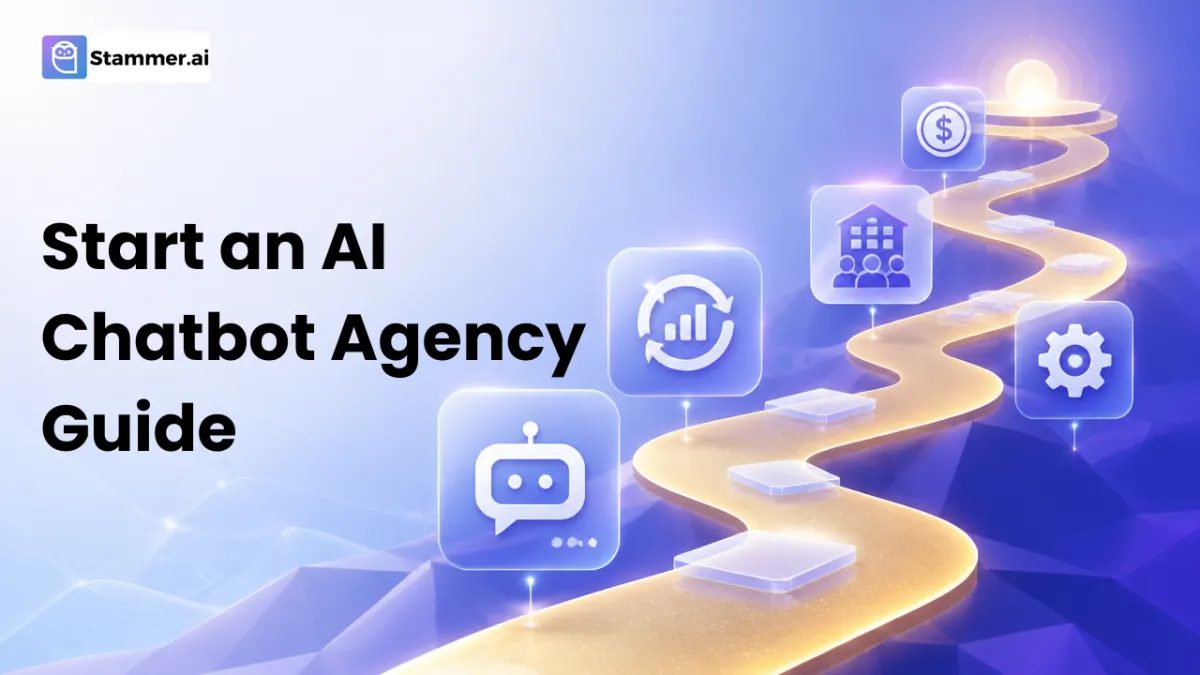
How to Start an AI Chatbot Agency: A Roadmap to Recurring Revenue
A couple scrolls through property listings at eleven on a weeknight and finds a house they love. They send a question through the listing agent's website and hear nothing back. By the time the agent replies the next morning, another agent's site has already answered their questions and booked them a viewing.
That scene repeats every day across every industry, and somewhere an agency is collecting a monthly retainer to make sure it never happens to their clients. That agency could be yours. This guide explains how to start an AI chatbot agency and build it into a recurring revenue business.
What an AI Chatbot Agency Does
An AI chatbot agency builds, brands, and manages chatbots for client businesses. The agency configures each bot, trains it on the client's information, deploys it on the client's website, and charges a monthly fee to keep it running. The client gets an assistant that answers questions, captures leads, and books appointments around the clock. The agency keeps the recurring margin.
The model is narrower than a broader AI automation agency, which sells workflow automation across many different tools and processes. A chatbot agency goes deep on one product instead. That focus makes the offer easier to explain, easier to sell, and far easier to deliver consistently, which matters most in your first year.
The revenue shape is what makes the model attractive. A web design agency finishes a project and starts hunting for the next one, while a chatbot agency stacks retainers. Every client you sign in January is still paying you in December, so the work you do this quarter compounds instead of resetting to zero.
Why the Reseller Model Beats Building from Scratch
You have two paths into this business. You can develop your own chatbot software, or you can resell an existing platform under your own brand. Building your own means months of development before you earn anything, followed by ongoing maintenance, hosting costs, and rework every time the underlying AI models change.
Reselling through a white label SaaS platform removes that burden entirely. The platform handles the infrastructure while you put your logo, your domain, and your pricing on top. Clients see your brand and nothing else.
You move from idea to sellable product in days rather than months, and your costs stay predictable because you pay a flat subscription instead of development salaries. For a new agency, speed to market and low overhead beat owning code you would struggle to maintain.
Not every platform supports a real agency, so evaluate the white label depth before you commit. You want branding that extends to the domain and login page rather than a logo swap, separate accounts for each client, and billing that runs through your own payment processor so revenue lands in your account, not the platform's. If clients can see the software vendor anywhere in their experience, you are a middleman rather than a product owner.
Step 1: Pick a Niche and Define Your Offer
Agencies that sell to everyone end up convincing no one. A niche lets you learn one industry's problems, reuse the same bot templates across clients, and build referrals inside a connected community. Pick an industry you understand or one where local businesses lose money every time a question goes unanswered.
Several verticals respond especially well to chatbot services.
Restaurants use bots for reservations, menus, and hours, and a restaurant chatbot pays for itself in recovered bookings.
Real estate agents need after-hours lead capture and viewing appointments handled automatically.
Dental and medical practices want appointment booking and patient FAQs off the front desk's plate.
Online stores use e-commerce chatbots for order questions, product recommendations, and support deflection.
Once you choose a vertical, define one clear package. A single well-scoped offer, such as a lead capture bot with booking built in, sells faster than a menu of vague options. Three questions make the niche decision easier.
Does the business lose money when an inquiry goes unanswered, can the owner approve a monthly retainer without a committee, and can you reach many similar businesses through the same channel? A yes to all three means you can template the build once and sell it repeatedly.
Step 2: Set Up Your Platform and Branding
Your platform is your product, so set it up before you pitch anyone. With a white label AI chatbot platform like Stammer, you connect your own domain, upload your logo, and set your brand colors so the dashboard your clients log into carries your name from the first click. Stammer also gives each client a separate sub-account with its own agents, settings, and usage, which keeps client work cleanly separated as you grow.
Set up your own subscription plans inside the platform at the same time, so a client who says yes can be onboarded and billed the same day. Treat this stage as building the storefront. When a prospect asks to see the product, you want to show them a polished platform under your brand, not a third-party tool with your name taped on.
Step 3: Build and Train Your First Chatbot
Build your first bot for your own agency site before you build one for a client. The exercise teaches you the platform and gives you a live demo.
Agent training is where good bots separate from bad ones. You load the business's information, common questions, policies, and service details into the knowledge base, and the agent draws on that material in every conversation.
Thin inputs produce vague answers, so gather real customer questions from the client before launch. Ask the front desk which five questions they answer every single day and make sure the bot handles those flawlessly before anything else.
Scope the first client build tightly. A bot that answers FAQs, captures contact details, and books appointments covers most of the value in most niches, and you can add capability later as part of an upsell.
Configure a clean handoff as well. When the bot reaches a question it cannot resolve, the conversation should route to a human with the full transcript attached, so the customer never has to repeat themselves.
The difference matters in concrete terms. A wrong answer creates a complaint your client has to clean up, while a graceful escalation still ends as a captured lead in their inbox. Before launch, test the agent the way a skeptical customer would, asking the awkward and off-script questions, and refine the knowledge base until the answers hold up.
Step 4: Price Your Services
Charge a one-time setup fee plus a monthly retainer. The setup fee covers the build and training work, while the retainer covers hosting, updates, monitoring, and your margin. Because you pay the platform a flat subscription and bill each client individually through your own Stripe account, every additional client increases your margin rather than your costs.
Anchor your pricing to the value of a captured lead in your niche, not to your own effort. A bot that books two extra patients a month justifies a healthy retainer for a dental practice, and the same bot priced against your hours would leave most of that value on the table. Tier your retainers if it helps the sale, with a base plan for the core bot and higher plans that add channels, extra agents, or priority support. For a full breakdown of retainers, usage tiers, and per-agent pricing, see our guide to chatbot pricing models.
Step 5: Land Your First Clients
Inbound traffic takes months of publishing to build, so plan on direct outreach for your first clients. The most effective pitch is a working demo, so build a bot trained on the prospect's own website content before you ever contact them. Sending a link to a chatbot that already answers questions about their business turns a cold email into a product trial.
questions about their business turns a cold email into a product trial.
A few channels work reliably for a new chatbot agency.
Walk into local businesses in your niche and demo the bot on your phone.
Send personalized outreach with a demo link built from the prospect's site.
Partner with web designers and marketing agencies who can resell your service to their clients.
Post short videos showing a bot handling real customer questions in your vertical.
Expect the sale to take more than one touch. A chatbot is a new category of spend for most owners, and new spend gets weighed before it gets approved. Follow up with something useful each time, such as a transcript of the demo bot answering a question they actually get from customers.
Close the first two or three clients at a founding-client rate if you need to. Case studies and referrals from real businesses are worth more than full margin in month one.
Step 6: Deliver and Scale
Delivery is where retainers survive or die. Onboard each client into their own sub-account, walk them through the conversations their bot is handling, and send a short monthly report on leads captured, appointments booked, and questions answered.
A client who never hears from you has no evidence the service is working, and that monthly report is the evidence. Review the conversation logs monthly as well, because the questions the bot struggles with tell you exactly what to add to the knowledge base next.
Expanding an existing account takes far less selling than winning a new one, because the trust is already built. A client running one bot on their website can add agents for other channels, a second location, or a separate sales workflow, and each addition raises the retainer with almost no extra delivery work on your side.
Once chatbots are running smoothly, expand the offer. AI voice agents let the same clients answer phone calls with the same trained knowledge, which raises your retainer without requiring a new sales motion. A client who already sees chatbot results in their monthly report has the proof in hand when you propose a voice.
Mistakes That Stall New Chatbot Agencies
Most new agencies fail on avoidable errors rather than competition. Watch for these patterns.
Underpricing the retainer, which fills your roster with clients who cannot fund your growth.
Skipping the niche and pitching every business, which makes every sale a cold start.
Overpromising what the bot can do, which turns launch week into refund week.
Neglecting the knowledge base after launch, which lets answer quality decay until the client cancels.
Start Your Agency with Stammer
You do not need code, staff, or a big budget to start an AI chatbot agency. You need a niche, a branded platform, one well-trained demo bot, and the discipline to pitch it consistently. Stammer gives you the platform side on day one, with full white label branding, client sub-accounts, and built-in Stripe billing so you keep the margin on every subscription. Review the pricing plans and start your 14-day free trial to build your first branded chatbot this week.

Start selling AI Agents with Stammer.ai
Get started today!